Choosing a dumpling machine in 2026 requires more than comparing prices, speed, and polished product videos. Global food manufacturers are investing heavily in automation. The International Federation of Robotics reported 541,302 industrial robot installations worldwide in 2023, showing continued demand for consistent, labor-saving production. Meanwhile, PMMI’s automation research highlights the growing importance of flexible equipment, digital monitoring, and easier changeovers in food processing. These trends matter when a machine must handle different fillings, wrapper thicknesses, and production volumes.
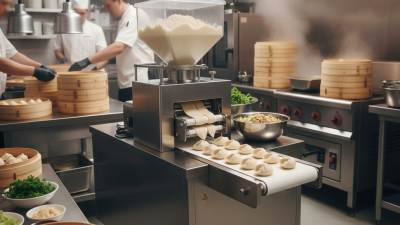
A practical evaluation should begin with the dumpling itself. Place several wrapper samples on the forming station. Watch whether the machine seals thin dough cleanly or leaves small openings around the edge. Check actual output, not only the advertised maximum. A line rated at 6,000 pieces per hour may produce far less after filling changes, cleaning, and adjustments. Hygienic design also deserves close attention. Food-contact parts should be easy to remove, inspect, and sanitize, with documentation supporting applicable food-safety requirements in your market.
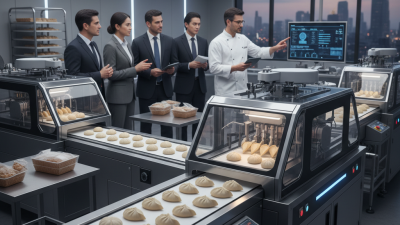
The best dumpling machine is not automatically the fastest model. It should fit your recipe, workforce, floor space, maintenance skills, and future growth. Reports from MarketsandMarkets and Grand View Research consistently identify automation, efficiency, and smart manufacturing as major food-equipment trends, but market forecasts cannot replace factory testing. That assumption can fail. Ask for live trials using your dough and filling. Review spare-parts availability, training, warranty terms, energy use, and service response times. A careful decision protects product quality today and reduces costly surprises tomorrow.
Choosing a dumpling machine should begin with your production target, not a machine catalogue. Define your daily demand, working hours, and expected growth before comparing equipment. A small kitchen serving 500 dumplings daily needs a different setup from a factory producing 20,000. Measure real orders for several weeks. Include weekday dips, weekend peaks, and seasonal changes.
Convert daily demand into hourly output. Then add a practical reserve of 15 to 20 percent. This buffer can cover staff changes, cleaning, and unexpected orders.
Do not trust the advertised maximum alone. Actual speed depends on dough texture, filling moisture, dumpling size, and operator skill. Test your own recipes. Small details matter.
Your target should also include acceptable waste and product consistency. Record broken wrappers, uneven filling, and misshaped folds during a timed trial. A machine may produce quickly but create expensive rejects. That would weaken your real output.
I once underestimated changeover time in a production plan. It looked efficient on paper, but cleaning and adjustment consumed nearly an hour. Leave space for reality.
Ask whether the team can operate the machine safely, clean it thoroughly, and change products without lengthy delays. A reliable decision uses measured samples, documented operating costs, and clear output goals.
How to Choose a Dumpling Machine in 2026?
Compare Dumpling Machine Types and Forming Methods
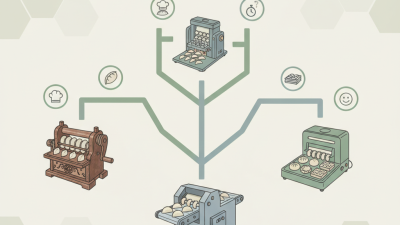
Choosing a dumpling machine starts with the filling, wrapper, and expected output. A single-lane machine suits small kitchens and frequent recipe changes. Multi-lane equipment handles steady production but requires more floor space and careful setup. Rotary machines can form hundreds of pieces hourly, while compact tabletop models offer better control for limited batches. Speed is useful. Consistency matters more.
Forming methods affect texture and appearance. Press-forming creates uniform pleats with firm pressure around the wrapper edge. It works well with meat, vegetable, and mixed fillings. Mould-forming uses shaped cavities, producing similar sizes with less operator training. However, sticky dough may cling to the mould and cause torn edges. Folding systems imitate hand pleating, but their results depend heavily on wrapper thickness and filling placement.
Check whether the machine adjusts filling weight, sealing pressure, and wrapper diameter. These controls reduce waste during recipe changes. Ask for a live test using your own dough. A machine that performs well with soft dough may struggle with chilled or thicker wrappers. This detail is easy to miss. Cleanability also deserves practical attention; narrow filling channels can hide residue after a busy shift. Review output samples, reject rates, and maintenance access before choosing capacity over flexibility.
Compare dumpling machine types and forming methods by representative production capacity.
How to interpret the chart: Manual forming offers the greatest flexibility for different recipes but requires more labor. Semi-automatic systems improve consistency while still allowing operator control. Automatic stamping and rotary forming machines provide higher throughput and are more suitable for standardized products and continuous production.
Planning note: The figures show representative midpoints of commonly published commercial operating ranges. Actual output depends on dumpling size, wrapper thickness, filling consistency, product shape, and operator efficiency.
When choosing a dumpling machine in 2026, capacity should match real demand, not an optimistic forecast. PMMI reported U.S. packaging machinery shipments of about $10.2 billion in 2022, reflecting continued investment in automated food production. Yet higher output is not always better. A machine rated at 6,000 dumplings per hour may require steady dough supply, trained operators, and reliable filling preparation. Test it with your actual recipe. Record weight variation, sealing speed, and downtime.
Size affects installation, cleaning, and future expansion. Measure doorways, ceiling height, drainage, and service access before ordering. A compact machine may fit a small kitchen, but limited hopper space can create frequent stoppages. That detail is easy to overlook. The 2024 State of the Industry report from the Food Processing Suppliers Association highlights labor and operational efficiency as continuing equipment priorities. Efficiency still depends on workflow design.
Materials deserve equal attention. Food-contact parts should use corrosion-resistant, hygienic materials, commonly stainless steel, with smooth surfaces and removable components. Confirm cleaning procedures against recognized food-hygiene guidance, including Codex Alimentarius principles. Product compatibility is more than shape. Check dough hydration, wrapper thickness, filling texture, dumpling size, and folding style. Meat, vegetable, and soup fillings behave differently. Ask for production trials using your ingredients. A polished demonstration can mislead. I would also leave capacity unused during early months, because maintenance, recipe changes, and operator learning often reduce the advertised rate.
| Machine Category | Typical Capacity | Approx. Machine Size | Typical Power Requirement | Recommended Contact Materials | Suitable Product Specifications | Key Selection Considerations |
|---|---|---|---|---|---|---|
| Manual Dumpling Press | 10–30 pieces/min | 250–450 × 250–450 × 300–600 mm | None | Food-grade stainless steel forming surfaces; food-safe polymer handles | Small batches; round wrappers generally 80–120 mm; approximately 15–35 g per dumpling | Best for restaurants, test kitchens, and low-volume production. Requires more operator labor and gives less consistent output than powered equipment. |
| Single-Station Semi-Automatic Machine | 30–60 pieces/min | 700–1,000 × 500–700 × 1,200–1,500 mm | Approximately 0.75–1.5 kW | 304 stainless steel for food-contact parts; corrosion-resistant forming molds | Commonly supports 80–120 mm wrappers and 15–40 g filling weights | A practical choice for small commercial kitchens. Check whether the filling hopper and wrapper guide can be adjusted for different dough thicknesses. |
| Compact Automatic Dumpling Machine | 60–120 pieces/min | 1,000–1,600 × 600–900 × 1,300–1,700 mm | Approximately 1.5–3.0 kW | 304 stainless steel; 316 stainless steel may be preferred for highly salty or acidic fillings | Usually suitable for boiled, steamed, or frozen dumplings with 80–130 mm wrappers and 15–50 g piece weights | Balance output against available floor space. Verify speed at the specific wrapper diameter, filling ratio, and dough formulation required. |
| High-Capacity Automatic Machine | 120–240 pieces/min | 1,500–2,500 × 800–1,200 × 1,500–2,000 mm | Approximately 3.0–7.5 kW | 304 or 316 stainless steel food-contact assemblies; hygienic sealed bearings | Typically handles 80–140 mm wrappers and approximately 20–60 g products, depending on configuration | Designed for continuous production. Confirm electrical capacity, compressed-air requirements, changeover time, and the availability of spare forming components. |
| Multi-Product Forming Line | 200–600 pieces/min | 3,000–8,000 × 1,000–2,000 × 1,600–2,200 mm | Approximately 7.5–25 kW | 304 stainless steel frame and contact parts; 316 stainless steel for demanding sanitation conditions | May support dumplings, potstickers, wontons, or filled pastries when dedicated tooling and feeding systems are installed | Evaluate the complete line rather than the forming unit alone. The conveyor, flouring system, freezer interface, and packing equipment must match the target throughput. |
| Frozen-Dumpling Production System | 100–500 pieces/min | 4,000–12,000 × 1,200–2,500 × 1,700–2,500 mm | Approximately 10–40 kW, excluding refrigeration | 304 stainless steel; insulated and washable surfaces around cooling and transfer areas | Suitable for filled dumplings intended for blast freezing, storage, and distribution; product size commonly ranges from 15–60 g | Assess freezer capacity, residence time, belt width, product spacing, sanitation access, and the effect of freezing on wrapper cracking or seal strength. |
| Custom-Tooling Machine | 40–250 pieces/min | Varies by tooling and automation level | Approximately 1.5–15 kW | 304 or 316 stainless steel with removable food-grade tooling | Non-standard shapes, oversized dumplings, special pleats, unusual wrapper diameters, or recipes with specialized filling textures | Request production trials using the actual dough and filling. Confirm mold availability, tooling replacement cost, cleaning procedures, and future product-change flexibility. |
Capacity and dimensions are typical planning ranges for commercial equipment. Actual performance depends on wrapper thickness, dough elasticity, filling viscosity, filling ratio, product weight, operator skill, and machine configuration.
Choosing a dumpling machine in 2026 requires more than checking pieces per minute. The International Federation of Robotics reported 541,302 industrial robot installations worldwide in 2023. Automation is expanding quickly. However, speed alone is not a reliable buying metric.
Test servo control, filling accuracy, dough handling, recipe storage, and changeover time.
Use your actual dough and filling during trials. Measure rejects, stoppages, and operator touchpoints.
Advertised capacity can mislead.
The World Health Organization estimates that 600 million people suffer from contaminated food each year, with 420,000 deaths. Select sloped stainless-steel surfaces, sealed bearings, removable food-contact parts, and tool-free access.
ISO 14159 and EHEDG principles support hygienic equipment design. Check for hollow frames, dead corners, and exposed threads.
Cleanability matters. A glossy machine may still hide residue inside joints.
PMMI’s 2024 State of the Industry report identifies labor availability as a continuing equipment challenge. Choose clear diagnostics, accessible wear parts, lubrication points, and recorded maintenance alerts.
Do not treat touchscreen analytics as proof of reliability. No machine is maintenance-free. A short demonstration may hide long-term repairs.
Request service records, spare-part lead times, and a failure-response plan before purchasing.
How to Choose a Dumpling Machine in 2026?
Assess Total Cost, Supplier Support, and Long-Term Value
Choosing a dumpling machine in 2026 starts with total cost, not the catalog price. A machine priced at $18,000 may require molds, conveyors, spare cutters, training, installation, and electrical work. Test output during your real shift. Record dough temperature, filling viscosity, dumpling weight, cleaning time, and reject rates. In equipment evaluations, fast demonstrations can hide slower changeovers. That detail affects labor costs.
Supplier support deserves equal attention. The U.S. Bureau of Labor Statistics projects 15% employment growth for industrial machinery mechanics, maintenance workers, and millwrights from 2023 to 2033. Skilled technicians may remain difficult to secure. Ask about response times, technician coverage, spare-part availability, remote diagnosis, and warranty exclusions. If the machine uses pneumatics, ENERGY STAR reports that compressed-air leaks can waste 20% to 30% of system output. Small inefficiencies become expensive during long production shifts.
Build a five-year calculation. Include purchase, installation, labor, utilities, maintenance, consumables, downtime, and expected resale value. Request a trial using your filling, wrappers, and target weights. A supplier’s sample may perform better than your seasonal recipe. I would leave room for error here. Projected payback can slip when filling viscosity changes or operators need extra cleaning time. A spreadsheet cannot price operator frustration, missed orders, or one unavailable sensor. Long-term value depends on predictable support, stable forming quality, and practical parts access.