Choosing the right meat dicer machine is a production decision, not a simple equipment purchase. Cutting size, output volume, product temperature, and sanitation access directly affect daily performance. A machine that produces neat 10-millimeter cubes may struggle with chilled beef, frozen poultry, or fatty pork. Small details matter.
Industry reports support this growing focus on processing efficiency. The OECD-FAO Agricultural Outlook 2024–2033 describes continuing demand for animal protein and greater pressure on processors to improve productivity. Grand View Research also identifies automation, food safety, and consistent processing as important factors in the meat processing equipment market. These trends make equipment selection more technical than it first appears.
Food safety must remain central. USDA FSIS guidance emphasizes sanitary design, temperature control, and contamination prevention throughout meat processing operations. Therefore, buyers should inspect blade access, removable components, drainage points, and cleaning time before comparing prices. A powerful motor is not enough. A difficult-to-clean machine can create operational delays and increase avoidable risks.
Consider the whole shift. Can one operator load the hopper safely? Does the machine maintain uniform cubes after several hours? How quickly can technicians replace blades? These questions reveal practical value better than advertising claims. No model is perfect. A specification sheet may hide noise, vibration, or inconsistent cuts under real production conditions. This is where careful trials matter.
The best meat dicer machine should match the product, workforce, facility, and cleaning routine. Buyers should request sample tests, maintenance records, warranty terms, and verified output data. Reliable decisions come from evidence, not impressive photographs.
How to Choose the Best Meat Dicer Machine?
Understanding Meat Dicer Machine Types and Applications
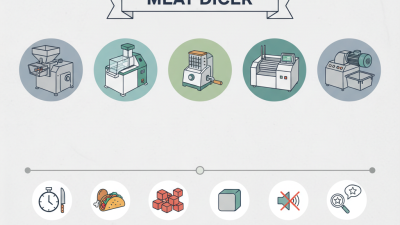
Choosing the best meat dicer starts with its type, not its advertised speed. Manual dicers suit small butcher shops and low-volume kitchens. They require more labor but offer simple control. Semi-automatic models reduce handling and maintain steady portion sizes. Fully automatic machines support large processing lines with faster output. They need more space, training, and maintenance.
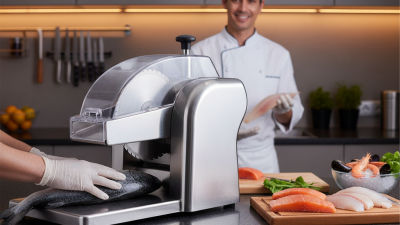
Application matters just as much. Restaurants may need compact equipment for fresh beef, pork, or poultry. Food processing facilities often require larger chambers, adjustable cutting grids, and continuous feeding. Frozen meat needs a machine designed for firm blocks. Using an unsuitable model can damage blades and produce uneven cubes. That mistake is costly.
Check the target cube size, hourly capacity, and meat temperature before purchasing. A practical test should measure actual output, not just catalogue figures. Look for smooth stainless-steel surfaces, removable parts, guarded blades, and easy drainage. Operators should confirm cleaning procedures and emergency-stop access. Food-contact materials should meet applicable safety requirements. Local electrical and workplace rules also deserve attention.
A larger machine is not always better. It may waste energy in a small kitchen. Conversely, an undersized unit can overheat during busy production. Noise, floor space, spare parts, and service access are easy to overlook. I would also test slippery meat, because ideal samples can hide handling problems. No selection is perfect. Careful testing reveals the compromises.
Capacity should match real production, not the number printed on a brochure. Calculate hourly demand from batch weight, cycle time, loading, cleaning, and changeovers. A machine rated at 800 kg/h may deliver less during short batches or frequent product changes. Leave practical headroom. Around 15–25% is often sensible, although plant layouts differ. FAO’s Food Outlook 2024 places global meat production above 360 million tonnes annually. The OECD-FAO Agricultural Outlook 2024–2033 also anticipates continued meat demand growth in developing markets. These figures support scalable equipment, but they do not justify buying the largest machine.
Cutting size must follow the final product specification.
Common diced formats include
10 mm,
15 mm,
and
20 mm,
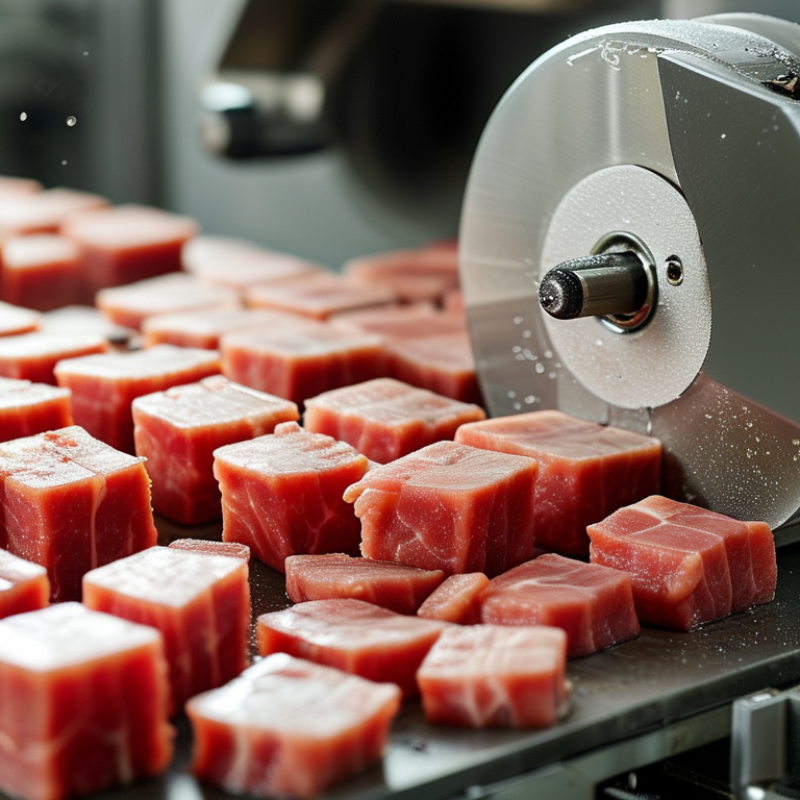
yet texture and temperature can change the result. Ask for test cuts using your actual meat, moisture level, and chilling condition. Smaller cuts usually require tighter control and sharper tooling. Larger pieces may increase throughput, but they can reduce portion consistency.
Do not trust averages alone. In production trials, measure yield, damaged pieces, cleaning time, and operator handling. One practical mistake is testing only warm, easy-to-cut material. Real shifts include tougher batches and interruptions. Record those imperfections before selecting capacity, blade configuration, and automation level.
PMMI’s food-processing workforce reports consistently identify labor availability as a major operational concern, making simple sanitation and safe changeovers important production requirements.
How to Choose the Best Meat Dicer Machine?
Comparing Blade Design, Materials, and Cutting Performance
Blade geometry strongly affects cube quality, product temperature, and cutting speed. A sharp edge is not enough. The blade angle, thickness, spacing, and grid alignment must work together. A poorly matched grid may crush soft meat instead of producing clean cubes. For firm, chilled meat, a rigid blade with a controlled bevel usually delivers more consistent cuts. Wider spacing creates larger pieces, while tighter spacing produces smaller portions.
Material choice also deserves close inspection. Food-contact stainless steel offers strong corrosion resistance and easier cleaning. Hardened tool steel can retain its edge longer, but it may require better protection against moisture. In practical equipment trials, I check welds, fasteners, and blade mounting areas for hidden residue points. Small gaps matter. Manufacturers should provide material details, hardness information, and maintenance guidance instead of vague claims.
Cutting performance should be measured with the meat you actually process. Test a consistent batch, record cube dimensions, and observe temperature changes during operation. Watch the discharge area, too. Uneven pieces often reveal vibration or poor blade alignment. I once tested a machine that produced attractive cubes but increased waste near the final portion. That result changed my evaluation method. Throughput alone can mislead. Inspect the cut surface, motor load, cleaning time, and blade wear after repeated cycles. A short trial may look perfect, yet expose weaknesses later.
Choosing a meat dicer machine starts with safe operation, not cutting speed. Look for interlocked guards, a clearly reachable emergency stop, non-slip controls, and protected blade access. The operator should not reach toward moving knives during routine clearing. OSHA’s machine-guarding guidance emphasizes preventing contact with hazardous moving parts. That principle remains practical on a busy processing floor.
Cleaning deserves equal attention. Crevices, exposed threads, and hollow frames can trap meat residue and moisture. Choose smooth food-contact surfaces, removable cutting assemblies, and tool-free access where possible. The CDC estimates that foodborne illnesses cause about 48 million illnesses and 128,000 hospitalizations annually in the United States. This figure covers many causes, but it shows why sanitation design matters. FDA Food Code 2022 also stresses cleaning and sanitizing food-contact surfaces at suitable intervals.
Maintenance should be visible and repeatable. Check blade sharpness, fasteners, seals, guards, and emergency-stop function before production. Keep a dated inspection log. A machine may look clean while hiding residue beneath a guard. I would not treat a high water-resistance rating as proof of easy sanitation. That assumption can fail. Ask for cleaning instructions, replacement intervals, lubrication requirements, and service access before purchasing. If workers need improvised tools or excessive force, the design deserves another review. Practical trials often reveal more than a specification sheet.
Choosing the right meat dicer starts with your budget and workspace. A compact machine may cost less, but it can limit batch size and production speed. Measure the available area carefully, including space for loading, cleaning, and operator movement. A machine should not block walkways or emergency access.
Think about your daily volume, meat temperature, and preferred cube size. Chilled meat usually cuts more consistently than soft, warm meat. Check the machine’s cutting range, motor power, and adjustment method before purchasing. Stainless steel surfaces are practical because they resist corrosion and simplify routine sanitation. Removable parts also reduce cleaning time, although they can be easy to misplace.
My first equipment estimate was wrong because I measured the machine, not the whole workflow. Allow room for trays, waste collection, and maintenance tools. Confirm that your electrical supply matches the machine’s requirements. A lower-priced model may become expensive if blades wear quickly or repairs require specialist service. Ask for clear maintenance instructions and replacement-part availability. Do not overlook noise, drainage, or floor stability. Small details matter. Test a sample batch when possible, and record the actual output rather than trusting advertised capacity.