How to Choose the Best Onion Peeling Machine?

Choosing the right onion peeling machine is not simply a matter of comparing prices. It is a production decision involving yield, labor, hygiene, maintenance, and product consistency. A machine that performs well in a showroom may struggle with wet onions, uneven sizes, or fragile outer skins. These details matter on a busy processing line.

Dr. G. S. Mittal, a respected food-processing equipment specialist, once observed, “Successful mechanization must protect product quality while reducing unnecessary labor.” That principle remains useful when evaluating an onion peeling machine. Buyers should examine peeling accuracy, onion damage, throughput, compressed-air requirements, and cleaning access. They should also ask for trials using their own onion varieties. Demonstrations with perfect raw material can create false confidence.

Look beyond impressive capacity figures. A machine rated for five tons per hour may deliver less when onions vary in diameter or moisture. Ask how quickly operators can adjust the rollers, blades, or air pressure. Check whether replacement parts are available locally. Study the warranty terms. Maintenance should not require dismantling half the line.

The right choice depends on your actual operation.

A smaller processor may value flexibility more than maximum speed. A large factory may prioritize continuous feeding and automated inspection. Energy use also deserves attention, although it is sometimes overlooked during purchasing. My own caution is simple: no onion peeling machine solves poor preparation or weak process control. Compare test results, calculate total operating costs, and speak with current users before committing. A careful decision usually outperforms a rushed one.
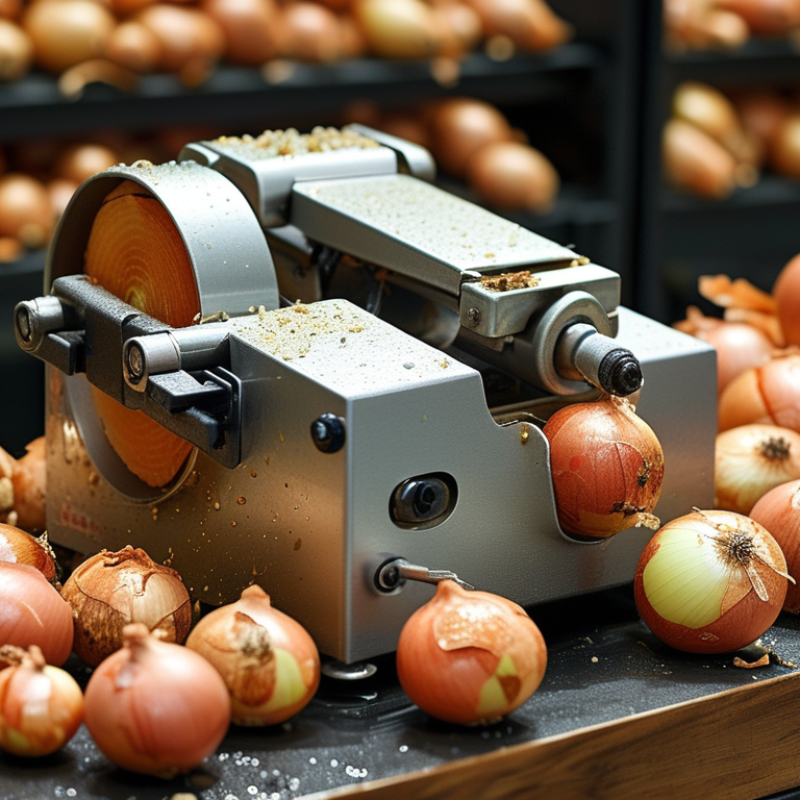
How to Choose the Best Onion Peeling Machine?

Understanding Onion Peeling Machine Types

How to Choose the Best Onion Peeling Machine?

Onion peeling machine types should match production volume, onion size, and final product quality. FAOSTAT reports global onion and shallot production above 100 million tonnes in recent years. USDA Foreign Agricultural Service estimates also place worldwide output near this level. Such scale creates different processing needs. A small kitchen processor may need a compact abrasive peeler. A frozen-food factory may require continuous pneumatic or steam-assisted equipment.

Abrasive peeling machines remove skins through rotating brushes or rough surfaces. They suit firm onions and moderate production lines. However, excessive friction can damage the outer flesh. Knife peeling systems provide precise cutting, but they need skilled adjustment for uneven onions. Pneumatic peeling uses compressed air to loosen dry skins. It can reduce direct contact, though very wet onions may lower efficiency. Steam peeling is fast and suitable for large factories, but it needs water, energy, and careful temperature control.

Look beyond headline capacity. A machine rated at two tonnes per hour may perform differently with small, soft onions. Ask for trials using your actual crop. Measure peeling loss, damaged bulbs, cleaning time, and compressed-air demand. Food-processing equipment studies commonly treat yield and sanitation as core performance indicators. In practice, operators sometimes focus too heavily on speed. I have seen that mistake. A slower machine with fewer damaged onions may create better usable output and lower waste. That calculation deserves a real trial, not a brochure promise.

How to Choose the Best Onion Peeling Machine?

Understanding Onion Peeling Machine Types

Abrasive drum machines are commonly selected for flexible processing and moderate output. Knife or roller peeling machines are suitable when gentle handling and consistent peeling are important. Air-blast machines can provide higher throughput with low water consumption, making them a practical choice for large-scale processing. Actual capacity depends on onion size, variety, moisture, peeling rate, and machine configuration.

Assessing Capacity and Peeling Efficiency

How to Choose the Best Onion Peeling Machine?

Capacity should match your actual harvest, not an optimistic sales forecast. FAOSTAT reported more than 100 million tonnes of onions produced worldwide in 2022. That scale increases pressure on processors, but bigger equipment is not always better. Measure hourly input during peak delivery, then compare it with the machine’s tested throughput. A unit rated at 2,000 kilograms per hour may perform differently with wet, irregular, or tightly layered onions. Ask for trials using your own onion varieties and sizes. Record peeled output, waste, stoppages, and labor time.

Peeling efficiency needs more than a clean appearance. Calculate usable yield: peeled onions divided by total input, multiplied by 100. Also inspect cuts, bruising, skin residue, and split bulbs. USDA Agricultural Marketing Service quality standards emphasize defects and damage, which can affect final grading and selling value. PMMI’s State of the Industry reports continue to identify labor availability as a strong reason for food-processing automation. However, automation may add maintenance work. That trade-off is easy to underestimate.

Tips: Test three batches, including small and oversized onions. Check performance after thirty minutes, not only during a short demonstration. Request data on water use, blade replacement, cleaning time, and average recovery rate. I would question any efficiency claim without a defined test method. Sometimes a slower machine produces more saleable onions. That is the uncomfortable detail many capacity comparisons miss.

Comparing Onion Size, Variety, and Processing Compatibility

Choosing an onion peeling machine starts with the crop, not the machine catalog. FAOSTAT data records roughly 108 million tonnes of onions and shallots produced worldwide in 2022. That volume includes major differences in bulb size, moisture, firmness, and skin structure. Size matters. Measure actual diameter ranges, not only average diameter. A line handling 45–65 mm bulbs may damage larger onions or leave smaller ones poorly peeled.

Variety also changes peeling behavior. Yellow onions often have firm, layered skins, while sweet onions may contain more moisture and softer flesh. Red onions can show greater color loss when excessive abrasion is used. USDA Agricultural Marketing Service onion standards emphasize diameter, maturity, and visible defects, which are useful inspection points before equipment selection. Record bulb weight, skin dryness, defect rate, and breakage during a full shift. Small details matter.

Processing compatibility must match the complete line. Check hopper size, feeding orientation, peeling method, water or air requirements, discharge height, and cleaning time. A machine may perform well on dry, uniform bulbs but struggle with freshly harvested onions. In plant trials, diameter often receives the blame; moisture can be the real cause of waste. Test before scaling. Ask for samples using your own crop. A short trial with mixed sizes is more revealing than a polished demonstration batch. The best setting may also reduce yield slightly, because aggressive peeling removes edible layers. That trade-off deserves measurement, not guesswork.

Checking Machine Materials, Safety, and Ease of Maintenance

How to Choose the Best Onion Peeling Machine?

Checking Machine Materials, Safety, and Ease of Maintenance

Material choice affects hygiene, service life, and cleaning speed. FDA Food Code 2022 requires food-contact surfaces to be smooth, corrosion-resistant, nonabsorbent, and easily cleanable. For onion peeling equipment, stainless steel is usually the safer choice. Inspect welds closely. Rough seams can trap onion skins and moisture. I once focused too much on polished panels and missed an awkward drain area. That was a useful mistake.

Safety needs evidence, not promises. OSHA’s machine guarding rule, 29 CFR 1910.212, requires protection from moving parts. Look for enclosed peeling chambers, interlocked access doors, emergency stops, and clear lockout points. The U.S. Bureau of Labor Statistics recorded 2.4 recordable cases per 100 full-time private-industry workers in 2023. Food factories should treat prevention as daily work. FAO’s 2019 State of Food and Agriculture estimated that 14% of food is lost between harvest and retail. Reliable peeling can reduce waste, but only when operators can clean and adjust the machine safely.

Tips: Request material certificates and guard-test records. Run a timed cleaning trial using real onion residue. Check whether screens, belts, and blades can be removed without special tools. Ask for a maintenance schedule, spare-part list, and clear electrical diagrams. A machine that looks advanced may still be inconvenient. Test it before purchase.

Evaluating Costs, Energy Use, and Supplier Support

Choosing an onion peeling machine requires more than comparing purchase prices. A low-cost unit may consume more water, electricity, and labor during daily production. Measure the expected output, such as kilograms per hour, under real working conditions. A machine handling 1,000 kilograms daily can expose small energy differences quickly. Ask for power ratings, water requirements, peeling loss, and cleaning time. These details reveal the true operating cost.

Tips: Request a full cost sheet. Include installation, training, spare parts, maintenance, and transportation. Check energy use during both normal and peak operation. A short factory trial is valuable. Watch the onions after peeling. Excessive flesh loss may reduce profits, even when the machine looks efficient. I have found that theoretical capacity often differs from practical capacity. That gap deserves careful questioning.

Supplier support also affects long-term value. Confirm response times, technician availability, warranty terms, and spare-part delivery schedules. Ask whether operators receive hands-on training for adjustment and sanitation. Reliable documentation should explain routine checks clearly, including blade inspection and belt tension. Speak with current users if possible, but do not rely on testimonials alone. Compare service commitments in writing. A slightly higher initial cost can be reasonable when support prevents long production delays. Still, expensive support is not automatically better. Test the supplier’s communication before signing. Send specific questions and observe how clearly they respond.

How to Choose the Best Onion Peeling Machine? - Evaluating Costs, Energy Use, and Supplier Support

Comparative benchmark for commercial onion-peeling equipment

Evaluation Dimension Compact Batch Peeler Standard Commercial Peeler High-Capacity Continuous Peeler Recommended Selection Consideration
Typical processing capacity 150–300 kg/hour 500–1,000 kg/hour 1,500–3,000 kg/hour Choose capacity at least 15–20% above the normal hourly requirement.
Typical purchase price US$3,000–8,000 US$9,000–22,000 US$25,000–60,000 Compare the installed cost, not only the equipment quotation.
Installed power demand 1.5–3 kW 4–8 kW 10–22 kW Verify electrical supply, motor efficiency, and peak-load requirements.
Estimated electricity use 5–10 kWh per metric ton 6–12 kWh per metric ton 7–14 kWh per metric ton Higher throughput generally lowers energy cost per ton when utilization is high.
Water requirement 0.3–0.8 m³/hour 0.8–2.0 m³/hour 2.0–5.0 m³/hour Confirm drainage capacity and whether water recirculation is available.
Peeling efficiency 90–95% 92–97% 94–98% Request test results using the same onion variety, size range, and moisture condition.
Product loss from over-peeling 3–7% 2–5% 1.5–4% A lower purchase price may be offset by greater raw-material loss.
Recommended operators per shift 1 operator 1–2 operators 2–3 operators Include loading, inspection, cleaning, and unloading labor in the calculation.
Typical cleaning time 15–25 minutes 20–35 minutes 30–50 minutes Prioritize tool-free access, sloped surfaces, and removable food-contact parts.
Common maintenance items Brushes, seals, bearings Brushes, belts, seals, bearings Brushes, belts, pumps, sensors, bearings Check local availability, replacement intervals, and spare-part pricing.
Estimated annual maintenance cost US$300–800 US$700–1,800 US$1,500–4,000 Budget for preventive maintenance rather than waiting for breakdowns.
Estimated equipment life 5–8 years 7–10 years 8–12 years Actual life depends on sanitation, workload, corrosion control, and maintenance quality.
Supplier warranty benchmark 12 months 12–18 months 12–24 months Review coverage, exclusions, response time, and whether labor and freight are included.
Remote technical support target Within 1–2 business days Within 1 business day Within 4–24 hours Request written service-level commitments and escalation procedures.
Best operating environment Restaurants and small processors Medium food-processing lines Large factories and continuous production Match machine size to daily volume, shift pattern, floor space, and utility capacity.
Overall value profile Lowest entry cost Best balance for most processors Lowest unit cost at high utilization Select the option with the lowest total cost per processed ton over its expected service life.
Benchmark assumptions: Figures are typical planning ranges for stainless-steel commercial equipment processing sound dry onions. Actual results vary with onion diameter, variety, moisture, soil load, operating schedule, local utility prices, labor rates, shipping, installation, and sanitation requirements. Electricity estimates assume normal machine loading and exclude upstream or downstream equipment.