
How to Choose the Right Bulk Sack for Global Shipping?

Choosing the right Bulk Sack can determine whether a shipment arrives clean, stable, and ready for use. Global shipping adds pressure through handling, stacking, humidity, and long transit times. A sack that performs well in a local warehouse may fail inside a crowded container. Small details matter.

The decision begins with the product. Powder, granules, and irregular materials need different fabric strengths, coatings, and discharge designs. Consider filling speed, safe working load, lifting loops, liner requirements, and moisture protection. A food-grade product may require documented materials and controlled manufacturing conditions. Technical data should support every claim, including load testing and traceability. Experience shows that the cheapest option often creates higher costs through leakage, damaged goods, or difficult unloading.

Container dimensions also deserve careful attention. A sack may meet its rated capacity yet waste valuable space when filled. Measure the loaded shape, not only the empty bag. Check pallet patterns, stacking limits, and forklift access before placing a large order. It is easy to overlook.

Reliable suppliers should explain their testing methods and recommend designs based on real shipping conditions. Ask for samples, inspection records, and clear specifications. Do not rely on attractive photographs alone. A practical trial can reveal fabric abrasion, liner movement, or poor discharge flow before full production begins.

Some choices remain imperfect. Weather, cargo behavior, and handling practices can change across routes. Review the design after each shipment and record what happened. That habit turns a Bulk Sack purchase into a controlled packaging decision, rather than a guess.
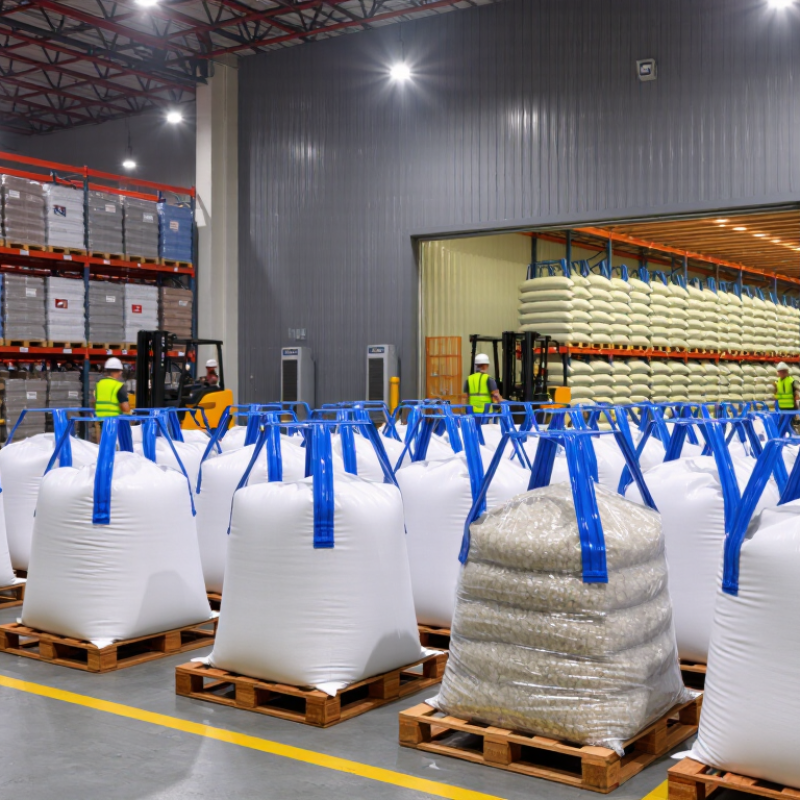
How to Choose the Right Bulk Sack for Global Shipping?

Define the Cargo, Weight, and Handling Requirements

Cargo definition should come before sack selection. Identify the material’s bulk density, particle size, moisture, temperature, and flow behavior. Powder may leak through seams, while sharp granules can abrade fabric during loading. Hygroscopic cargo may also absorb moisture during a long sea voyage. UNCTAD’s Review of Maritime Transport 2024 states that shipping carries over 80% of global merchandise trade by volume. That distance makes moisture barriers and reliable closure systems practical requirements, not decorative features.

Weight needs a precise calculation. Record net cargo weight, sack tare weight, pallet load, and any temporary overload during filling. A sack rated for 1,000 kilograms is not automatically safe for every 1,000-kilogram operation. Confirm the safe working load, safety factor, filling method, and lifting configuration against ISO 21898 requirements. The World Bank’s Logistics Performance Index 2023 assessed 139 economies, showing how tracking, handling, and delivery reliability differ across shipping networks. Your design should tolerate those differences.

Handling details are often missed. Specify forklift loops or lifting points, discharge spouts, stacking height, warehouse storage time, and exposure to sunlight. Test how the filled sack behaves when lifted slightly off-center. It may tilt. That small weakness matters. A perfect specification is rarely perfect in the field, so trial filling, drop checks, and operator feedback should influence the final design.

Select the Appropriate Sack Design and Material

Choosing the right bulk sack starts with the cargo, not the container.
Dry powders often need woven polypropylene fabric with a fine coating. This reduces dust leakage and protects contents from light moisture. Hygroscopic materials may require an inner polyethylene liner. That small layer can prevent hard, unusable blocks after a humid voyage.

Sack design must match handling conditions. Four lifting loops suit crane movement, while a discharge spout supports controlled unloading. Check the filling method, outlet size, and required safety factor before ordering. A sack that fits the warehouse may not fit the pallet or container efficiently. Measure carefully. Minor errors create serious space loss.

Material thickness also deserves practical testing. Ask for seam strength data, fabric specifications, and documented load tests from a qualified laboratory. Inspect loop stitching and corner seams, where stress often concentrates. UV exposure can weaken fabric during outdoor storage, even when the sack looks intact. I have seen teams focus on capacity and overlook humidity, stacking height, and repeated handling. That approach is understandable, but incomplete. Shipping routes change, and the safest design should account for those changes. Test a sample under realistic filling, lifting, storage, and discharge conditions before placing a large order.

Verify Safety, Durability, and Regulatory Compliance

How to Choose the Right Bulk Sack for Global Shipping?

A bulk sack must survive lifting, stacking, vibration, humidity, and repeated handling. Appearance is not proof of safety. Check the safe working load, safety factor, seam strength, and lifting-loop design against ISO 21898 requirements. For sensitive cargo, request electrostatic testing and verified grounding instructions. The International Maritime Organization’s Cargo Transport Units Code also stresses proper load distribution and restraint. A sack can pass one test and still fail during a rough port transfer.

Global shipping adds pressure. UNCTAD’s Review of Maritime Transport 2024 reports that maritime trade reached about 12.3 billion tonnes in 2023. It also confirms that more than 80% of world merchandise trade moves by sea. That journey exposes packaging to salt air, rain, compression, and long storage periods. Select woven fabric with suitable UV resistance and a liner compatible with the cargo. Ask for production-batch traceability, laboratory test results, and a clear declaration of conformity.

Do not trust vague certificates. Verify the testing method, sample date, and stated load limits. The World Bank’s Logistics Performance Index 2023 evaluates reliability, infrastructure, customs, and tracking across international supply chains. A sack without traceable records weakens every one of these controls. In warehouse inspections, small seam defects are easy to miss. They become costly failures later. I would also review handling photos and stacking trials, not only paperwork. Compliance is rarely perfect. Recheck it when the route, climate, or cargo changes.

Match Sack Features to Global Transport Conditions

How to Choose the Right Bulk Sack for Global Shipping?

Global transport conditions should shape every bulk sack decision. Maritime shipping carries more than 80% of world merchandise trade by volume, according to UNCTAD’s Review of Maritime Transport. A sack may face salt air, container condensation, vibration, and long terminal storage. Select a moisture-resistant liner when powders can harden after brief exposure. Use sift-proof seams when fine particles may escape through needle holes.

Start with the cargo, then test the route. ISO 21898 provides requirements for flexible intermediate bulk containers, including construction, testing, and safe working load. Check the sack’s rated load against the actual product density. A 1,000-kilogram rating is not automatically suitable for every material. Filling height, discharge design, and lifting method also affect stability. Four lifting loops can simplify crane handling, but poor loop alignment may tilt a loaded sack.

The World Bank’s Logistics Performance Index 2023 shows that reliability and shipment timeliness remain uneven across countries. Choose UV-stabilized fabric for outdoor exposure. Add a barrier liner for humid ports. For sensitive powders, specify antistatic construction and confirm grounding procedures with the handler. Container dimensions matter too. A slightly shorter sack may prevent roof contact and reduce compression damage. I have seen well-designed sacks fail because the pallet was too narrow. That detail is easy to miss. Route trials, drop tests, and inspection records can reveal weaknesses before thousands of sacks enter circulation.

Compare Suppliers, Costs, and Quality Assurance Standards

How to Choose the Right Bulk Sack for Global Shipping?

A reliable bulk sack supplier should provide more than a low unit price. Compare fabric weight, dimensions, lifting loops, liner fit, and stitching details. Ask for evidence. Request material specifications, batch records, inspection reports, and recent load-test results. A supplier that answers clearly is easier to trust during a shipment delay.

Calculate the landed cost, not only the factory quotation. Include sampling, printing, liners, palletizing, freight, customs handling, and possible replacement costs. A cheaper sack may fail after rain exposure or rough container handling. Cheap is not cheap. In my own sourcing reviews, I have seen small seam defects create large delays. That gap matters.

Quality assurance should follow a documented process. Look for incoming fabric checks, seam-strength testing, dimensional inspections, and final visual audits. ISO 21898 can provide a useful reference for flexible intermediate bulk containers, but confirm whether it matches your cargo and transport conditions. Ask how the supplier controls UV exposure, moisture protection, and traceability. A sample should represent regular production, not a specially prepared piece. Inspect it by filling, lifting, and storing it as your team would. No supplier is perfect. A transparent correction process may matter more than polished sales language.

Article Source: