
Top Printed Aluminium Foil Suppliers for Global Buyers
Printed Aluminium Foil sits where shelf appeal meets practical protection. It carries crisp colors, small product details, and brand marks across flexible packaging, while buyers still need dependable barrier performance, consistent printing, and reliable delivery. A roll may look simple on a sample board. Under production lights, however, pinholes, color shifts, or uneven coating can become costly problems.
Industry research offers useful context, but not a substitute for supplier checks. Smithers’ flexible-packaging market research tracks changing demand, materials, and production technologies across the sector. European Aluminium’s packaging and recycling resources explain why material design and end-of-life considerations matter to buyers. These sources can guide questions about specifications and sustainability claims; figures should be checked against each report’s edition and scope. Supplier certificates, print samples, and test results deserve equal attention.
A good shortlist should compare more than price. Ask about alloy and temper, foil thickness, ink systems, food-contact documentation where relevant, minimum order quantities, lead times, and quality-control records. Request a production sample, not only a polished catalogue image. Small differences show up fast.
I have not included a named expert quotation because no verifiable source was supplied for one. Inventing an attribution would weaken trust. For global buyers, the practical lesson is plain: validate claims, test samples, and confirm specifications in writing. The right partner makes performance repeatable, not merely persuasive.
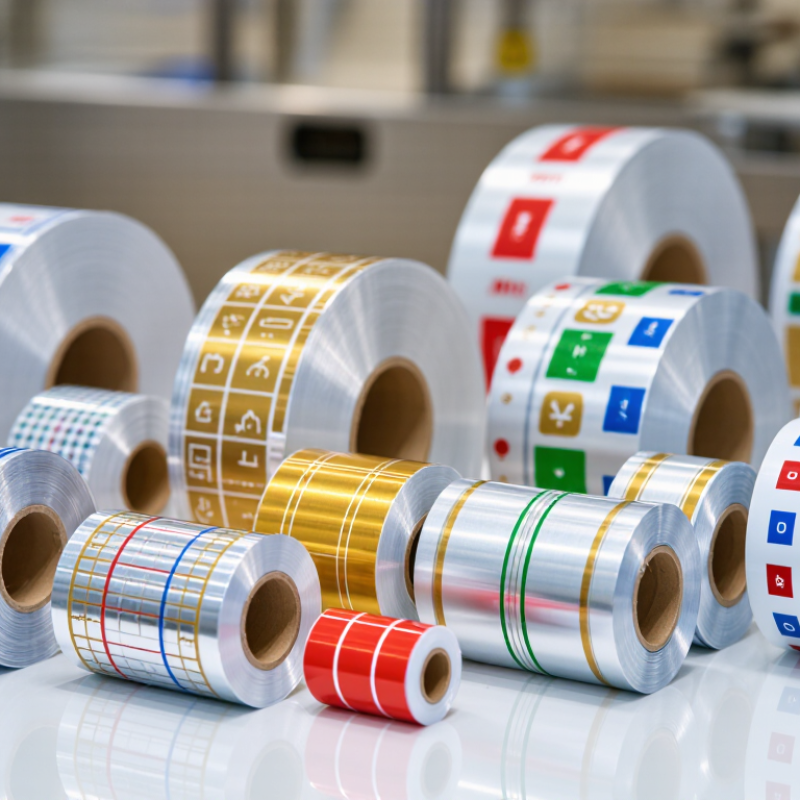
What Printed Aluminium Foil Is and Where It Is Used
Printed aluminium foil is thin rolled aluminium designed to carry graphics while retaining a protective role. Many packages combine it with paper or plastic layers for better sealing, handling, and print durability. The exact structure depends on the product, filling method, and required barrier performance. Ink may sit on the outer surface or between layers, where another material can help protect it. This distinction matters when assessing rub resistance and contact with contents.
Printed foil appears on confectionery wrappers, tea packs, dairy lids, ready-meal components, and some personal-care packaging. It can display product details, opening instructions, decorative patterns, or batch information. A foil lid may show crisp lettering around its edge, while a flexible wrapper can carry bright colors across a folded seam. Not every foil package blocks light, moisture, or oxygen equally; coatings, thickness, and seals all affect performance. Details matter. I would check the finished pack, not just a printed sample, because folds and sealing can change how graphics look.
Tips: Match the foil structure to the product and packing line. Test print adhesion, folding, and sealing with real production conditions. Ask suppliers for material specifications and sample packs; a neat sample does not guarantee identical results at scale.
Top Printed Aluminium Foil Suppliers for Global Buyers - What Printed Aluminium Foil Is and Where It Is Used
| Packaging format | What printed aluminium foil is | Common foil thickness | Typical printing and structure | Where it is used | Key checks for buyers |
|---|---|---|---|---|---|
| Flexible sachets and pouches | A thin aluminium layer incorporated into a flexible packaging laminate; graphics may appear on the outer film or on a printable layer within the laminate. | Often about 6–12 μm for laminate applications; specifications vary by product and structure. | Usually flexographic or gravure printing on a polymer film, followed by lamination with foil and sealant layers. | Instant beverages, seasonings, snacks, and other products requiring protection from moisture, oxygen, or light. | Confirm the complete laminate structure, barrier requirements, seal performance, intended filling process, and food-contact compliance. |
| Pharmaceutical blister lidding | Printed lidding foil designed to seal to a compatible blister-forming material, commonly with a heat-seal coating on the sealing side. | Commonly around 20–25 μm, depending on the blister design and specification. | Typically printed on the outward-facing side; the reverse side carries a suitable heat-seal coating. | Unit-dose tablet and capsule packs, including push-through blister packs. | Check seal compatibility, print legibility, pinhole control, opening performance, and applicable pharmaceutical packaging requirements. |
| Confectionery and chocolate wrap | Decorated foil used as a wrap or as part of a paper-and-foil or film-and-foil construction. | Often about 8–20 μm, with thickness selected for handling and wrapping needs. | May be printed directly with suitable inks or supplied as a printed laminate; coatings and inks must suit the intended use. | Chocolate bars, individual sweets, and selected bakery or confectionery products. | Evaluate foldability, tear behavior, print rub resistance, odor, and whether the foil contacts food directly. |
| Yogurt and dairy cup lids | Printed lidding foil, commonly coated on the sealing side, made to seal to a specified cup material. | Often approximately 30–50 μm, subject to the lid design and sealing system. | Print is generally on the outside; a heat-seal lacquer or coating is applied to the cup-facing side. | Single-serve dairy products, desserts, and other sealed cups. | Verify cup-resin compatibility, seal window, peel or release behavior, and resistance to the filling and storage conditions. |
| Household and catering foil | Aluminium foil printed for identification or decoration; it may be supplied as a roll or incorporated into a converted pack. | Common household grades are roughly 10–20 μm; heavier grades are also available. | Printing and any protective coating must be suitable for the foil finish and the intended handling or food-contact use. | Food wrapping, cooking, storage, and catering applications, depending on the product specification. | Check thickness tolerance, temper, surface condition, roll dimensions, coating suitability, and applicable food-contact rules. |
| Insulation and technical laminates | Printed foil used as a visible facing or identification layer in a multi-material construction; it is not necessarily a food package. | Thickness is application-specific; laminate designs may use thin foil layers. | Printing may be applied to a film or coating laminated to the foil, depending on the required durability and appearance. | Selected building insulation facings, HVAC materials, and technical or industrial laminates. | Specify substrate, bonding method, service temperature, surface durability, and any required fire or building-code performance. |
Buyer note: Thickness ranges are indicative examples, not universal standards. Printed aluminium foil may be printed directly or used in a printed laminate; the suitable construction depends on the application, converting process, and regulatory requirements.