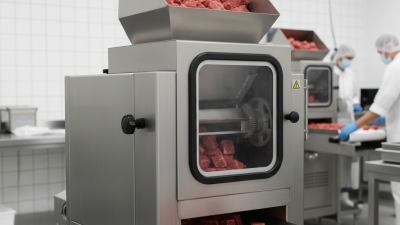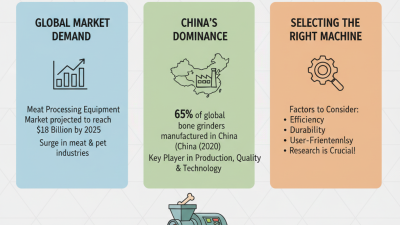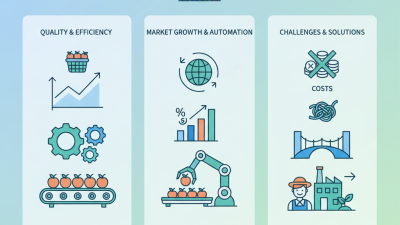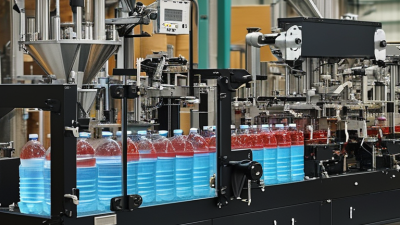
The 2026 meat processing machine market is moving beyond simple cutting and grinding. Plants now seek equipment that improves yield, hygiene, traceability, and worker safety. According to Grand View Research, the global meat processing equipment market was valued at approximately USD 16 billion in 2023. Its report also projects steady growth through 2030, supported by automation, convenience foods, and stricter production controls. Estimates differ across research firms. That difference deserves attention.
MarketsandMarkets identifies automated processing, smart sensors, and integrated production lines as major growth areas. In a modern facility, a slicer may weigh each portion, while vision systems inspect color, shape, and foreign material risks. Vacuum tumblers, bowl cutters, grinders, forming machines, and high-pressure washing systems are becoming connected parts of one process. Still, automation alone cannot solve poor maintenance or weak operator training.
Meat-industry expert Temple Grandin offers a useful reminder: “You have to use your eyes, ears, and common sense.” Her observation applies directly to selecting a meat processing machine. Buyers should examine noise, cleaning access, blade changes, temperature control, data records, and actual product loss. A glossy specification sheet can hide practical problems. The best 2026 machine may not be the fastest model. It may be the one that operators can clean correctly, monitor easily, and repair without stopping an entire production line. This guide compares the leading machine types and considers where technology genuinely improves performance.
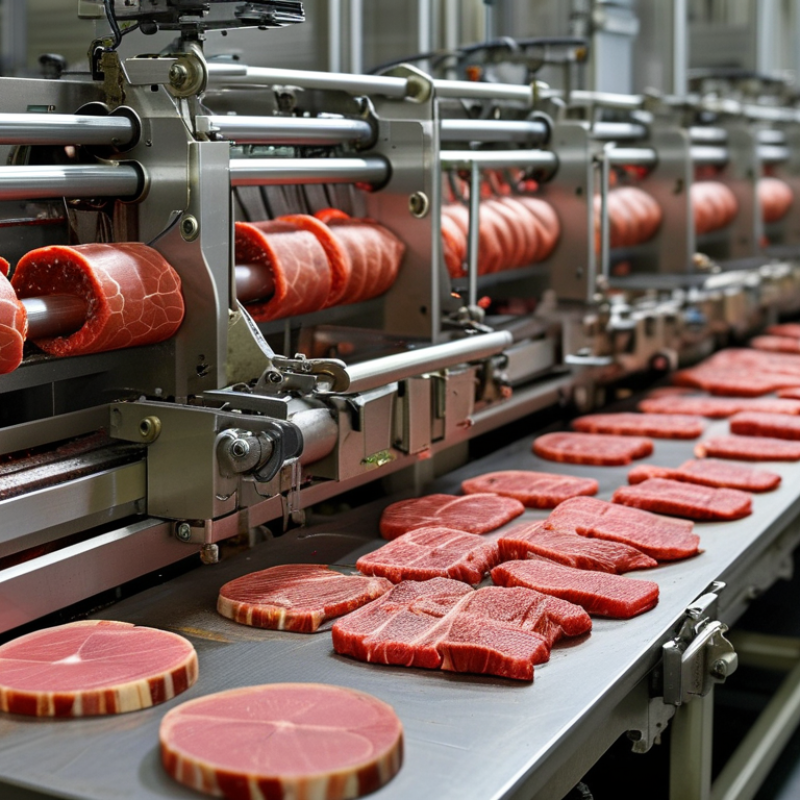
FAO recorded 361 million tonnes of global meat output in 2022. That volume explains the demand for faster, safer, and more adaptable processing systems. A practical 2026 taxonomy begins with cutting machines, grinders, slicers, and deboning equipment. These machines reduce manual handling and improve portion consistency. Grinding systems process trim into mince, while forming machines create patties, nuggets, or shaped portions. However, one machine rarely fits every plant.
Mixers, tumblers, injectors, and marinators support flavor distribution and texture control. Chilling and freezing equipment protect product quality during storage and transport. Vacuum packaging, tray sealing, and modified-atmosphere systems help limit exposure to air. Hygiene equipment also matters. Wash stations, conveyor cleaning units, metal detection, and temperature monitoring support reliable production. Small measurement errors can still affect yield.
Tips: Match machine capacity with realistic daily output, not an ideal target. Check cleaning access, spare-part availability, operator training, and energy use. Ask for trial data with your actual raw material. Specifications can look impressive on paper. They may perform differently on a wet, fatty, or irregular batch. A useful review should compare throughput, sanitation design, safety controls, and maintenance time. Taxonomies are helpful, but plant conditions remain decisive.
Cutting and deboning machines remain central to high-volume meat plants in 2026. Their main value is simple: recover more usable meat from every carcass. Precision band saws handle consistent bone cuts, while portioning machines produce uniform weights at higher speeds. Advanced systems can adjust cutting paths using carcass size, fat coverage, and bone position.
Yield comes first. Poor calibration can leave valuable meat on bones or create uneven portions. Modern deboning equipment uses guided blades, pressure controls, and vision sensors to separate muscle from bone more accurately.
These features reduce trimming waste and help operators maintain stable output during long shifts. Still, sensors can misread irregular carcasses. Human inspection remains necessary.
Sanitation affects performance as much as cutting accuracy. Machines with tool-free access, smooth surfaces, and quick washdown routines reduce contamination risks and downtime. In practical plant trials, small alignment errors often become large losses across thousands of units. Operators should record yield, blade wear, stoppages, and rework rates daily. Automation helps, but it does not replace skilled adjustment. That assumption is worth challenging. A fast machine may perform worse when product size, temperature, or workflow changes.
What Are the 2026 Top Meat Processing Machine Types?
Grinders, Mixers, and Emulsifiers: Foundations of Processed-Meat Production
In 2026, grinders, mixers, and emulsifiers remain central to processed-meat production. Each machine controls a different stage of texture development and product consistency. A grinder reduces chilled meat into measured particle sizes. Plate selection affects bite, appearance, and cooking behavior. Keeping the meat cold also helps limit smearing and protects the desired structure.
Mixers distribute meat, fat, water, salt, and seasonings evenly. Paddle movement should be gentle enough to reduce overworking. Vacuum mixing can remove trapped air and create a denser, cleaner slice. Operators should monitor batch weight, mixing time, and product temperature. Small errors become visible later.
Emulsifiers create fine, stable meat systems for products needing a smooth texture. They work best when raw materials enter at controlled temperatures. Excessive heat may weaken the emulsion and cause fat separation during cooking. Cleaning access, stainless-steel contact surfaces, and documented checks support dependable operation. These details matter more than impressive speed.
A practical production line needs balance. A fast grinder cannot repair poor raw-material preparation. An advanced emulsifier cannot correct uneven mixing. This is where equipment selection becomes less obvious. Throughput figures can look attractive, yet maintenance access and operator training often decide daily performance. Some facilities still underestimate this point. That mistake deserves review.
Grinders, mixers, and emulsifiers form the core equipment sequence used in many processed-meat production lines.
The chart shows the typical processing-line position of each machine type: grinding normally comes first for size reduction, mixing follows for uniform ingredient distribution, and emulsification is commonly used later to create a fine, stable meat batter. Actual sequencing can vary by product recipe and plant design.
Meat processing lines in 2026 will focus on forming, stuffing, and slicing machines that create consistent products. These machines help standardize weight, shape, and portion size during busy production shifts.
Forming machines press prepared meat into uniform patties, nuggets, or other defined shapes. Accurate molds reduce edge variation and improve cooking consistency. Stuffing machines control filling volume inside casings, helping maintain even diameter and reliable package weights. Slicing machines then divide cooked or chilled products into measured portions. Sharp blades, stable product temperature, and adjustable speed all affect slice quality. Portion sizes become predictable.
From practical plant experience, calibration matters as much as machine capacity. Sensors should check weight frequently, while operators inspect shapes, seals, and slice edges. A small temperature change can make meat softer and harder to form. Small errors matter. No machine removes every judgment, and rushed settings may create waste or uneven portions. This is where documented procedures and trained staff support safer, more repeatable results. Producers should also verify cleaning access, contact surfaces, and emergency controls before installation.
Tips: Test several batch sizes before full production. Record weight variation, filling pressure, and slice thickness. Review the data weekly. If results drift, inspect the product temperature and tooling before increasing machine speed. A faster line is not always a better line.
What Are the 2026 Top Meat Processing Machine Types?
Meat processors entering 2026 are prioritizing vacuum packaging and inspection systems. These machines address a costly weakness: products can lose value through leaks, oxygen exposure, or hidden contamination. FAO’s State of Food and Agriculture 2019 estimated that 14% of food is lost between harvest and retail. That benchmark includes meat and other foods. It is not a factory score.
Chamber vacuum machines, thermoformers, and vacuum tray sealers help remove air around fresh cuts, sausages, and portioned products. A tight seal can reduce purge, freezer burn, and rejected cartons. Metal detectors, X-ray units, vision cameras, and checkweighers add another control layer. They can identify metal fragments, missing labels, broken seals, and unusual package weights. Operators should record these results, not merely watch the display. A cool production floor, a wet film edge, and one folded corner can change performance quickly.
The UNEP Food Waste Index Report 2024 estimated 1.05 billion tonnes of food waste in 2022. Food loss and food waste are different stages, but the operational lesson is connected. Vacuum packaging does not replace temperature control or sanitation. It cannot rescue poor handling. Some facilities still treat inspection as an end-of-line formality. That deserves reconsideration. Machine selection should follow product temperature, package structure, throughput, cleaning routines, and actual rejection data. The most expensive system may still be the wrong one.
The table compares widely used machine categories for meat processing, packaging, quality control, and loss reduction. Throughput and operating figures are indicative industry ranges and vary by product size, packaging format, automation level, and local regulations.
| Machine Type | Primary Processing or Packaging Role | Typical Product Format | Typical Throughput or Operating Range | Key Quality and Safety Controls | Contribution to Food-Loss Reduction | Important Selection Criteria for 2026 |
|---|---|---|---|---|---|---|
| Chamber Vacuum Packaging Machine | Removes air from a bag inside a sealed chamber and heat-seals the package. | Fresh cuts Primal cuts Processed meat | Approximately 2–8 cycles per minute, depending on chamber size, bag dimensions, and sealing configuration. | Vacuum level, seal temperature, seal time, residual air, and package leakage. | Reduces oxidation and handling exposure, helping extend refrigerated shelf life when paired with an appropriate cold chain and validated packaging specification. | Chamber dimensions, double-seal capability, vacuum pump capacity, sanitation design, and compatibility with food-contact packaging materials. |
| Thermoform Vacuum Packaging Machine | Forms the bottom web, loads the meat product, removes air, and seals a top web in a continuous process. | Retail portions Sliced meat Boneless cuts | Commonly about 10–30 cycles per minute; actual output depends on lane count, pack length, and product loading. | Web temperature, forming depth, vacuum pressure, seal integrity, coding, and package appearance. | Uses standardized portions and repeatable seals, which can reduce leakage, overfilling, trimming losses, and premature product disposal. | Changeover speed, material efficiency, portion flexibility, inline inspection options, washdown accessibility, and recyclability of the packaging structure. |
| Tray-Sealing Machine with Modified Atmosphere Packaging | Places meat in a rigid tray, replaces the internal atmosphere with a selected gas mixture, and seals a barrier film. | Retail trays Minced meat Portioned cuts | Approximately 15–100 trays per minute, depending on the number of lanes and sealing tool. | Gas composition, residual oxygen, seal strength, tray alignment, film temperature, and leak testing. | Can support longer display life and reduce package leakage when gas ratios, film permeability, temperature, and hygiene are validated together. | Gas dosing accuracy, tray and film compatibility, sealing-tool flexibility, oxygen monitoring, and integration with checkweighing and vision inspection. |
| Vacuum Skin Packaging Machine | Uses a heat-softened top film to conform closely to the product and tray while removing air from around the meat. | Premium cuts Bone-in portions Retail-ready products | Typically about 5–20 packs per minute, depending on tray size, product height, and tooling. | Film heating, vacuum profile, seal temperature, seal contamination, package tightness, and product presentation. | Reduces product movement and purge-related presentation problems, while the close-fitting pack can lower package volume and handling damage. | Film stretch performance, bone protection, product height tolerance, seal reliability, shelf-display requirements, and material recovery options. |
| Inline Metal Detector | Detects metallic contaminants in meat products or sealed packages on a conveyor. | Fresh meat Frozen meat Processed products | Often around 60–300 products per minute, subject to aperture size, product effect, and line speed. | Ferrous, non-ferrous, and stainless-steel detection; automatic reject confirmation; fail-safe monitoring. | Prevents contaminated units from reaching customers and reduces the risk of large-scale product holds or unnecessary disposal caused by uncertain inspection results. | Product effect from salt or moisture, aperture dimensions, belt hygiene, reject verification, calibration procedures, and integration with traceability records. |
| X-Ray Inspection System | Inspects packaged meat for dense foreign materials and verifies selected physical attributes without opening the pack. | Packaged meat Bone-in products Ready-to-cook items | Commonly about 80–300 packs per minute, depending on product density, image resolution, and conveyor width. | Detection of dense contaminants such as metal, glass, mineral stone, and calcified bone fragments; fill-level and missing-product checks may also be available. | Reduces the need to discard entire production lots after a suspected contamination event and supports controlled rejection of individual packs. | Product density, pack size, radiation-safety compliance, image analysis capability, reject validation, and maintenance requirements. |
| Automatic Checkweigher | Weighs each package in motion and removes units outside the approved weight range. | Retail packs Bulk packs Vacuum packs | Approximately 80–400 products per minute, depending on product stability, belt length, and weighing accuracy. | Underweight and overweight rejection, average-weight monitoring, tare control, and statistical process feedback. | Limits giveaway caused by overfilling and prevents underweight packs from entering distribution, improving raw-material utilization and inventory accuracy. | Required accuracy, product spacing, weighing range, washdown rating, reject mechanism, data connectivity, and legal metrology requirements. |
| Vision Inspection System | Uses cameras and image-processing software to check package appearance, labels, codes, seals, and product placement. | Retail packs MAP trays Vacuum packs | Designed for continuous inline inspection, with practical speeds commonly ranging from 60–300 packs per minute. | Barcode and date-code verification, label presence, seal contamination, film wrinkles, package deformation, and product position. | Diverts defective packages before shipment, reducing customer returns, rework, repacking, and disposal caused by incorrect or damaged packaging. | Lighting consistency, camera resolution, artificial-intelligence model validation, false-reject rate, hygienic enclosure design, and data retention. |
| Leak Detection and Seal-Integrity Tester | Checks sealed packages for channels, pinholes, incomplete seals, and gross leakage. | Vacuum packs MAP packs Thermoformed packs | Offline sampling or inline inspection; speed depends on the test method, pack dimensions, and required sensitivity. | Pressure decay, vacuum decay, mass extraction, seal strength, and package integrity testing. | Identifies leaks before distribution, reducing premature spoilage, returns, and the loss of otherwise usable meat during storage and transport. | Detection sensitivity, test repeatability, package geometry, product temperature, validation method, and compatibility with food-safety management procedures. |
| Robotic Case Packing and Palletizing System | Automates the loading of inspected packs into cases and the organized stacking of cases for cold-chain distribution. | Retail cartons Foodservice cases Frozen products | Often about 10–30 cases per minute, depending on case pattern, payload, and pallet configuration. | Pack-count verification, case-code reading, weight confirmation, pallet pattern accuracy, and handling-error detection. | Reduces crushing, dropped packs, incorrect case quantities, and handling damage that can cause avoidable losses after processing. | Payload, hygienic robot design, cold-room performance, changeover flexibility, safety guarding, and integration with warehouse and traceability systems. |