How to Choose the Best Pizza Cone Machine from China?

Choosing the best pizza cone machine from China requires more than comparing prices online. You need to understand production goals, cone size, heating control, and daily workload. A compact machine may suit a café selling 100 cones daily. A larger model may be necessary for a busy food truck or franchise kitchen.

Michael Ayers, a pizza-equipment consultant with over 15 years of bakery machinery experience, says, “A reliable machine should make the same crisp cone at the end of the shift as it does at the beginning.” That standard matters. Ask suppliers for test videos, heating temperature ranges, mold dimensions, and hourly output. Check whether the machine uses food-grade stainless steel. Inspect the control panel, wiring, insulation, and emergency stop system. Small details can become expensive problems.

Do not choose from photographs alone. Request a sample cone made with your recipe. Test its thickness, shape, aroma, and resistance to sauce leakage. Confirm the required voltage before ordering. Ask about spare molds, heating elements, warranty coverage, installation help, and response times. Factory audits and independent inspection can improve purchasing confidence. Certifications should match your destination market and equipment type.

The cheapest option is not always economical. A machine with uneven heating may waste dough and produce cracked cones. A premium model may still disappoint if after-sales support is weak. This guide compares practical features, supplier reliability, customization options, and total ownership costs. Some recommendations may need adjustment. Your recipe, kitchen space, labor skills, and sales volume will influence the final choice.
How to Choose the Best Pizza Cone Machine from China?

What Is a Pizza Cone Machine and How Does It Work?

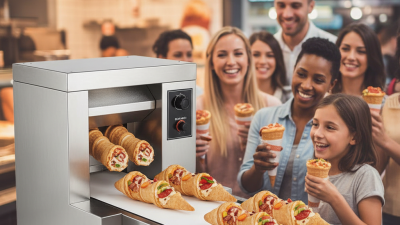
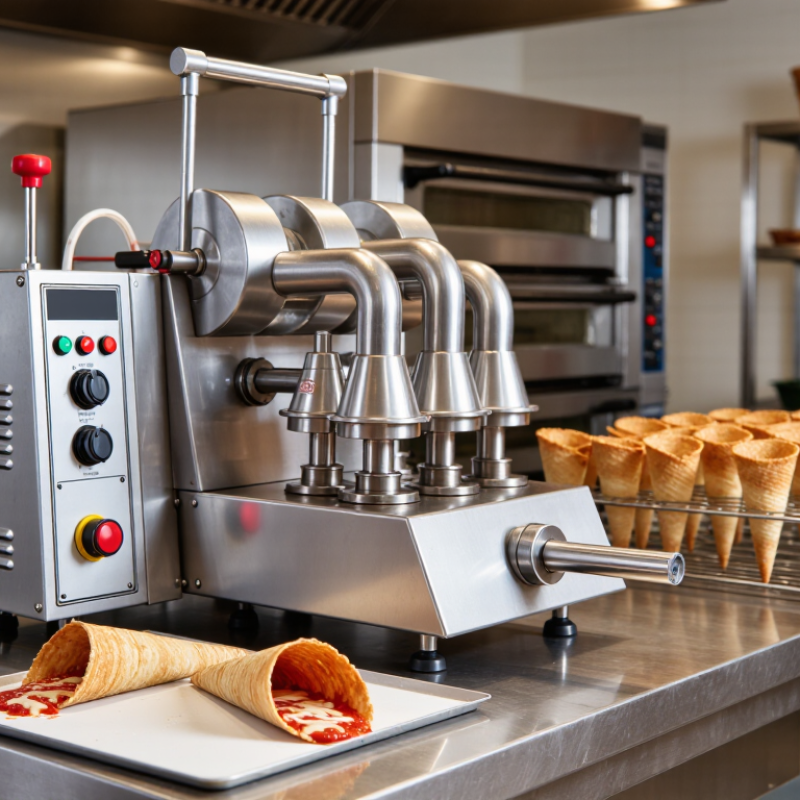
A pizza cone machine shapes pizza dough into a crisp, cone-like shell. It usually uses heated molds, a forming system, and adjustable temperature controls. The dough is placed around the mold, then pressed or rolled into shape. Heat sets the structure and creates a lightly browned surface.

After baking, the cone must cool before filling. This prevents soft toppings from weakening the shell. Depending on the design, the machine may produce several cones per cycle. Production speed, mold size, heating stability, and cleaning access are important when choosing equipment from China. In practical testing, small temperature changes can affect color, texture, and release performance. Stainless steel food-contact parts are preferable, but buyers should still request material details and inspection records.

Tips: Ask for a video showing the full working process. Confirm cone dimensions, voltage, output, and heating method before ordering. Request a sample test with your own dough recipe. A machine may perform well with standard dough but struggle with higher moisture content. That matters. Also check whether molds can be replaced easily. This detail is often overlooked. No machine is perfect, and advertised capacity may not match continuous production. Allow time for cooling, loading, cleaning, and minor adjustments. Clear technical communication reduces costly misunderstandings between the buyer and the manufacturer.

Define Your Required Capacity, Cone Size, and Production Output

How to Choose the Best Pizza Cone Machine from China?

Choosing a pizza cone machine from China starts with numbers, not photographs. Define three figures: daily capacity, cone size, and required production output. Grand View Research valued the global pizza market at about USD 197.4 billion in 2023. It projects 4.5% annual growth through 2030. That growth supports expansion, but your oven queue matters more than a global headline.

Measure your busiest hour. If you need 600 cones daily across eight hours, specify at least 75 finished cones per hour. A practical buffer of 15–25% protects against changeovers, rejects, and cleaning delays. Confirm whether the supplier’s output means formed cones or fully baked cones. These are not identical. Define diameter, length, wall thickness, and allowable weight variation. A 100-millimeter cone may suit one serving, yet fail another filling plan. Use samples with your actual dough.

PMMI’s 2024 State of the Industry report highlights labor availability and automation as continuing equipment concerns. Ask for factory trial videos, cycle-time records, and energy figures under your recipe. Check electrical standards and spare-part response before payment. Do not trust peak capacity alone. The calculation is imperfect. Dough temperature, moisture, and operator speed can change results. A machine producing 90 cones per hour may be weaker than one producing 75 consistently. Compare delivered output, not catalog promises.

Compare Machine Types, Materials, and Heating Methods

Choosing a pizza cone machine from China starts with production reality, not the lowest quotation. A manual press suits small shops and frequent recipe changes. It costs less, but output depends heavily on operator rhythm. Semi-automatic models improve consistency without requiring a full production line. Automatic systems offer speed, yet they need more space, maintenance skills, and stable power. Test cone diameter, release action, and cycle time with your own dough formula. Small differences become obvious after several hours.

Materials affect hygiene, heat transfer, and service life. Food-contact stainless steel is easier to clean and resists corrosion. Aluminum heats quickly and may reduce warm-up time, but its coating needs close inspection. Ask for material specifications, weld quality, and replacement-part availability. Electric heating offers precise control for indoor production. Gas heating can deliver strong heat, but ventilation and flame control require greater attention. Infrared elements heat surfaces quickly, although uneven dough thickness may create pale edges. Do not trust a demonstration alone. Measure temperature recovery after repeated cycles. I once focused too much on heating speed and overlooked recovery stability.

Tips: Request a sample run using your flour, oil, and filling style. Check cone weight, wall thickness, browning, and rejection rate. Confirm voltage, plug requirements, manuals, safety protection, and local compliance documents. Ask how quickly common parts can be supplied. A lower price may hide weaker insulation or inconvenient cleaning. Leave room for mistakes. Real production is rarely as smooth as a showroom test.

How to Choose the Best Pizza Cone Machine from China? - Compare Machine Types, Materials, and Heating Methods
Comparison Area Option Typical Capacity Common Specification Main Advantages Limitations and Best Use
Machine Type Manual Single-Cavity Press Approximately 40–80 cones per hour One forming cavity; manual filling, pressing, and removal Low initial cost, simple operation, compact footprint, and easy recipe testing Labor-intensive and less consistent in volume production. Best for small shops, sampling, and seasonal use.
Semi-Automatic Multi-Cavity Press Approximately 150–400 cones per hour Two to four cavities; manual batter loading with assisted heating and pressing Good balance between output, investment, operating control, and maintenance Still requires an operator for loading and unloading. Suitable for restaurants, bakeries, and growing food-service operations.
Automatic Indexing Machine Approximately 400–1,000 cones per hour Multiple cavities with timed indexing, automatic pressing, and temperature control More consistent size and baking time with reduced manual handling Higher purchase cost and greater control-system complexity. Best for stable, medium-volume production.
Continuous Rotary or Conveyor System Approximately 1,000–3,000+ cones per hour Continuous forming and baking with multiple stations or molds High throughput, repeatable production, and better integration with filling or packing lines Requires more floor space, trained maintenance personnel, and a reliable production schedule. Best for industrial output.
Food-Contact Materials Stainless Steel 304 Frame and Hoppers Not applicable Common food-equipment construction material; corrosion-resistant surface Easy to clean, durable, and widely accepted for food-contact equipment May show surface discoloration if exposed to aggressive chemicals or high-salt residues. Confirm the actual grade used on contact parts.
Cast Aluminum Heating Plates or Molds Not applicable Fast heat transfer with relatively low mold weight Shorter heat-up time and generally even temperature distribution when properly designed Can deform or corrode if poorly protected. The mold surface should be machined smoothly and maintained correctly.
PTFE-Coated Mold Surface Not applicable Low-stick coating applied over a compatible metal base Helps release baked cones and reduces the need for oil during production Coating can wear or scratch. Avoid metal tools and verify the coating is suitable for the machine's operating temperature.
Uncoated Stainless Steel Mold Not applicable Metal forming surface without a non-stick layer High resistance to coating wear and suitable for operators who prefer a long-lasting metal surface May require more careful batter formulation, mold seasoning, or release oil to prevent sticking.
Heating Method Electric Resistance Heating Usually 2–12 kW, depending on cavity count and machine size Heating elements installed beneath or around the forming plates Precise temperature control, clean operation, easy installation, and suitable for indoor kitchens Requires adequate electrical capacity. Energy consumption depends on insulation, duty cycle, and set temperature.
Gas Heating Often specified by burner input rather than electrical kW Gas burners heat plates or an enclosed baking chamber Can provide strong heat output where gas is economical or electricity is limited Needs ventilation, flame-safety controls, gas-line compliance, and careful heat balancing. Check local regulations before purchase.
Hybrid Electric Heating with Independent Zones Often approximately 4–16 kW for medium and larger machines Separate temperature control for upper and lower plates or different heating zones Better control of browning, wall thickness, and baking consistency when recipes require fine adjustment More sensors, wiring, and controls can increase maintenance requirements and purchase price.
Key Technical Criteria Temperature Control Common working range: approximately 160–250°C Digital controller, thermostat, or programmable temperature system Stable temperature improves color, crispness, cone strength, and repeatability Actual baking temperature depends on batter formula, mold design, loading speed, and heat recovery.
Heating and Baking Cycle Commonly approximately 45–120 seconds per batch Cycle time includes heating recovery, pressing, baking, and release Shorter and stable cycles increase practical output Rated capacity should be checked using the buyer's actual batter weight and cone dimensions, not only the supplier's maximum claim.
Cone Size and Mold Design Typical cone length: approximately 120–180 mm Fixed or interchangeable molds; diameter and angle vary by design Correct mold dimensions improve filling volume, structural strength, and compatibility with serving packages Confirm mold replacement cost, availability, and whether custom dimensions require a new mold set.
Electrical and Safety Configuration Common supplies include 220–240 V single-phase or three-phase systems Grounding, emergency stop, over-temperature protection, insulation, and guarded hot surfaces Improves operator safety and supports easier installation and compliance Voltage, frequency, plug type, guarding, and certification requirements must match the destination country.
Recommended Selection Best General-Purpose Choice Approximately 150–400 cones per hour Semi-automatic, two- to four-cavity electric machine with stainless steel construction and replaceable coated molds Usually offers the most practical balance of capacity, control, cleaning, investment, and flexibility Choose a larger automatic system only when demand is consistent enough to justify higher capital and maintenance costs.
Note: Capacity, power, temperature, and cycle-time figures are typical industry ranges rather than guaranteed performance values. Actual results vary with batter formulation, cone dimensions, mold design, operator speed, voltage, insulation, and production conditions. Request a sample test using your own recipe before placing an order.

Evaluate Supplier Quality, Safety Standards, Customization, and Support

How to Choose the Best Pizza Cone Machine from China?

Supplier quality begins with evidence, not attractive videos. Request factory audit records, material certificates, weld samples, and a live production test. Food-contact parts should use documented stainless steel grades and easy-clean designs. Check guards, emergency stops, electrical protection, and risk assessments. The WHO estimates that unsafe food causes 600 million illnesses and 420,000 deaths annually. That figure makes hygiene verification practical, not decorative. Demand evidence.

Certification also needs careful reading. The ISO Survey 2023 records more than 45,000 ISO 22000 certificates worldwide. However, a supplier’s certification may not cover every machine or production site. Confirm its scope and expiry date. Ask for test reports, manuals, and traceable component lists. A polished certificate can still hide weak factory control.

Customization should match your recipe and workflow. Test cone diameter, batter viscosity, baking temperature, output speed, and changeover time. Ask for sample cones using your ingredients. Measure breakage, color, wall thickness, and cooling stability. Discuss cleaning access and spare-part availability before ordering. Support matters after shipment. Require installation guidance, operator training, remote troubleshooting, and a clear response schedule. I would also request a small spare-parts kit. One overlooked sensor can stop production. No supplier is perfect; even a strong quotation deserves technical questions and a second review.

Calculate Total Costs, Shipping Requirements, and Purchase Value

How to Choose the Best Pizza Cone Machine from China?

Calculate Total Costs, Shipping Requirements, and Purchase Value

The invoice price is only the starting point. A machine listed at 8,000 dollars may need molds, spare heaters, installation tools, and export packing. Ask for a complete pro forma invoice. Include voltage, oven output, cone size, cycle time, and warranty terms. In practical purchasing, a cheaper machine can lose value if production stops for one missing sensor.

Use a simple landed-cost sheet. Add machine price, inland transport, export documentation, ocean freight, insurance, import duty, customs fees, and local delivery. The United Nations Conference on Trade and Development reported continuing volatility in maritime transport costs in its Review of Maritime Transport 2024. Request both port-to-port and door-to-door quotations. Confirm the container type, gross weight, crate dimensions, and loading method. Small errors become expensive quickly.

Energy and labor also shape purchase value. The 2024 PMMI State of the Industry report highlights efficiency, labor availability, and automation as major packaging-equipment concerns. Compare cones produced per hour, electricity used per batch, and cleaning time. For example, a 2,000-dollar saving may disappear if output falls by 20 percent. I would request a video test using your flour formula. Ask for measured output, not optimistic estimates. Payback calculations are useful, but imperfect. Product demand, rejected cones, and seasonal orders can change the result. Leave room for those uncomfortable variables.