
China Top Fish Cutting Machine Suppliers for Global Buyers
China has become a significant source of seafood-processing equipment for international buyers. Among its broad manufacturing base, the fish cutting machine stands out for improving portion consistency, processing speed, and workplace safety. These machines support fish markets, processing plants, restaurants, and frozen seafood operations.
This guide introduces leading Chinese suppliers and explains how global buyers can assess them. Practical experience matters here. A machine may look impressive in a product video, yet perform differently with salmon, tilapia, tuna, or frozen fillets. Buyers should review cutting accuracy, blade materials, conveyor design, output capacity, cleaning access, and electrical compatibility. Stainless steel construction is important, especially around wet production areas. It helps reduce corrosion and supports hygienic maintenance.
Reliable suppliers usually provide detailed specifications, sample testing, installation guidance, spare parts, and responsive after-sales support. Certifications can strengthen confidence, but documents should be verified against the actual model and destination-market requirements. Factory audits, video inspections, and trial orders can reveal details that brochures miss. Small details matter.
Cost should not be the only deciding factor. A low purchase price may hide expensive maintenance, difficult cleaning, or limited technical support. Some suppliers communicate clearly, while others need repeated clarification. That is worth noting. Product quality can also vary between batches, so written quality standards and acceptance checks are advisable.
The following overview is designed to help distributors, processors, and seafood businesses compare China’s top fish cutting machine suppliers with greater confidence. It focuses on practical performance, supplier credibility, customization ability, and long-term operating value. Mistakes remain possible, but careful verification reduces avoidable risk.
What Is a Fish Cutting Machine and How Does It Work?
China Top Fish Cutting Machine Suppliers for Global Buyers
What Is a Fish Cutting Machine and How Does It Work?
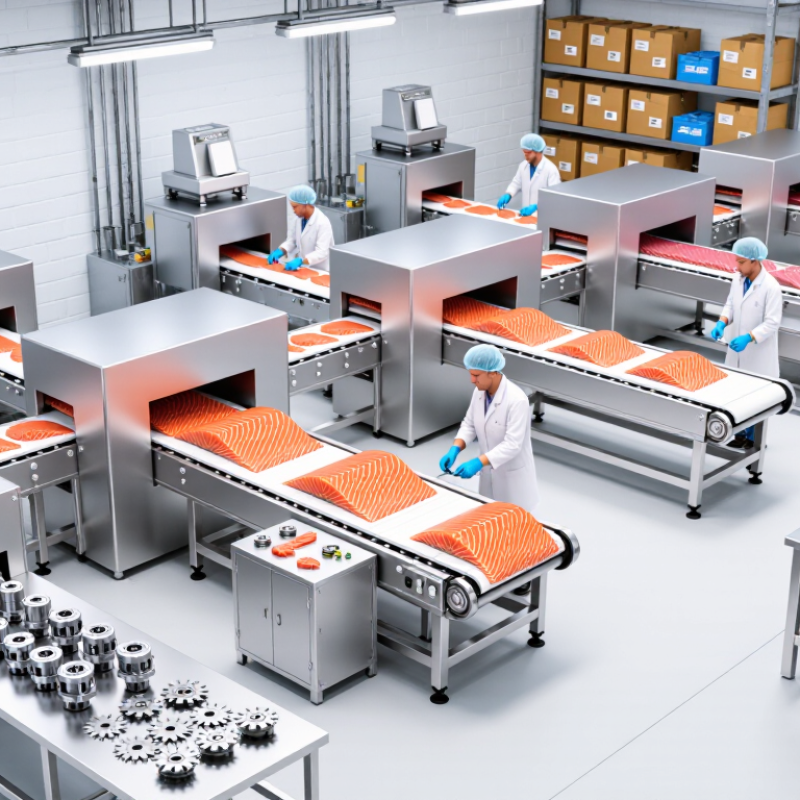
A fish cutting machine is industrial equipment designed to portion, slice, fillet, or steak fish with controlled movement. It usually combines a feeding conveyor, adjustable guides, cutting blades, and a discharge system. Some models use sensors to detect fish size and adjust cutting positions. Others depend on fixed measurements and trained operators. In real processing rooms, chilled fish enters the machine in a steady line. The blades then make repeated cuts at selected intervals. Clean water and stainless-steel surfaces support daily sanitation.
Machine performance depends on fish species, temperature, shape, and handling quality. A firm, evenly chilled fish usually produces cleaner portions. Soft or irregular fish may cause uneven cuts and more trimming waste. From practical evaluation, cutting accuracy is only one buying factor. Buyers should also check blade replacement, emergency stops, cleaning access, electrical standards, and operator training. Some machines appear highly automated, but setup still requires judgment. That detail is easy to underestimate.
Tips: Test the machine with your own fish samples before ordering. Measure portion weight, cutting speed, waste, and cleaning time. Ask for maintenance guidance and spare-part availability. Keep blades sharp, but do not ignore safe handling procedures. A small trial often reveals problems that product brochures miss.
China Top Fish Cutting Machine Suppliers for Global Buyers - What Is a Fish Cutting Machine and How Does It Work?
| Data Dimension | What It Means | Typical Data or Specification | How It Works or Why It Matters |
|---|---|---|---|
| Machine Definition | A fish cutting machine is food-processing equipment designed to cut, portion, slice, steak, split, or trim whole fish and fish fillets. | Used for fresh, chilled, or partially frozen fish, depending on the machine design. | The machine combines a feed system, cutting tool, product guides, guards, and a discharge conveyor or collection area. |
| Common Cutting Methods | Different machines use different cutting actions according to the required product format. | Band-saw cutting, circular-blade cutting, guillotine cutting, rotary slicing, and high-speed portioning. | The selected method affects cut accuracy, product yield, bone handling, cleaning requirements, and operating speed. |
| Typical Product Formats | The finished product may be prepared for retail, food service, further processing, or freezing. | Fish steaks, portions, fillet strips, butterfly cuts, split fish, headless fish, and trimmed fillets. | Adjustable guides, blade position, product orientation, and programmable cutting intervals determine the final format. |
| Compatible Fish Types | Compatibility depends on fish size, shape, skin condition, bone structure, and product temperature. | Common applications include salmon, tuna, cod, haddock, trout, mackerel, carp, tilapia, and other similar species. | Manufacturers normally select the blade, feed mechanism, and cutting parameters according to the species and target cut. |
| Processing Condition | The condition of the fish strongly influences cutting quality and equipment performance. | Fresh or chilled fish is commonly processed near refrigerated temperatures; semi-frozen products may be used for cleaner portion cuts. | Product temperature changes firmness, blade resistance, cutting accuracy, drip loss, and the risk of deformation. |
| Capacity Range | Throughput is the amount of product processed during a specified period. | Small machines may process several hundred kilograms per hour, while industrial automated lines can process several tonnes per hour. | Actual capacity depends on fish dimensions, cut thickness, operator loading, machine configuration, and required product quality. |
| Cutting Accuracy | Accuracy refers to consistency in portion weight, cut thickness, length, and angle. | High-precision portioning systems use fixed or programmable cutting parameters; manual machines depend more on operator control. | Consistent portions improve packaging efficiency, product presentation, yield control, and compliance with customer specifications. |
| Feed and Handling System | The feed system positions and transfers fish toward the cutting area. | Manual loading, belt conveyors, product pockets, rollers, clamps, or automated alignment systems may be used. | Stable product positioning reduces uneven cuts, slipping, product damage, and operator handling time. |
| Blade and Cutting Tool | The blade is selected according to the fish material, cut type, required finish, and production speed. | Stainless-steel or corrosion-resistant cutting components are common in wet food-processing environments. | Blade sharpness, tension, tooth design, speed, and maintenance directly influence cut quality and operating safety. |
| Construction Materials | Food-processing machines require materials that tolerate moisture, salt, frequent cleaning, and temperature changes. | Food-contact areas are commonly made from stainless steel or other approved food-grade materials; non-contact parts may use compatible engineering plastics. | Corrosion-resistant construction supports hygiene, durability, cleanability, and long-term use in seafood-processing facilities. |
| Power Requirements | Electrical demand depends on the cutting tool, motor size, conveyor system, automation level, and machine capacity. | Small units may use single-phase power, while industrial systems commonly use three-phase power. | Buyers should confirm voltage, frequency, phase, rated power, plug type, and local electrical requirements before installation. |
| Safety Features | Cutting equipment must control access to moving blades and stop operation when unsafe conditions occur. | Typical features include blade guards, emergency-stop buttons, interlocked covers, overload protection, and non-slip controls. | Safety systems help reduce injury risks and support safer operation, maintenance, and cleaning procedures. |
| Cleaning and Sanitation | Seafood equipment must be designed for rapid removal of fish residues, scales, blood, and fat. | Useful features include open-frame construction, removable guards, smooth welds, accessible surfaces, and washable components. | Effective cleaning reduces cross-contamination risks and supports the facility’s sanitation program. |
| Automation Level | Automation describes how much of loading, positioning, cutting, inspection, and discharge is performed by the machine. | Manual, semi-automatic, and fully automatic configurations are available for different production volumes. | Higher automation can reduce labor requirements and improve consistency, but usually requires greater investment and technical support. |
| Yield Considerations | Yield is the proportion of usable product obtained from the incoming fish. | Yield varies with fish species, anatomy, trimming method, cut thickness, blade kerf, and operator settings. | Correct machine selection and precise adjustment can reduce unnecessary bone, flesh, and trim losses. |
| Buyer Evaluation Criteria | Global buyers should assess the machine against production, hygiene, safety, and service requirements. | Key points include capacity, fish-size range, cut style, material quality, power supply, cleaning design, spare parts, documentation, and after-sales support. | A complete evaluation helps ensure that the equipment matches the processing line, local regulations, workforce, and target market. |
Note: Capacity, dimensions, power consumption, and cutting accuracy are application-dependent. Final specifications should be confirmed through product trials using the intended fish species, size range, temperature, and cut format.
Related Posts
-
How to Choose a Fish Cutting Machine in 2026?
-
How to Choose the Best Fish Cutting Machine for Your Kitchen Needs
-
Top 10 Fish Cutting Machines for Efficient Processing?
-
How to Choose the Best Onion Peeling Machine?
-
Best Meat Dicer Machine for Efficient Food Processing?
-
Top 5 Best Meat Dicer Machines for Effortless Food Preparation?