Choosing the best bone grinder machine in China requires more than comparing motor power or advertised capacity. The right choice depends on bone hardness, daily throughput, target particle size, cleaning routines, and downstream processing. A small pet-food workshop may need a compact stainless-steel unit. A rendering or meat-processing plant may require continuous feeding, stronger shafts, and automatic overload protection. The machine must fit the process, not merely look powerful.
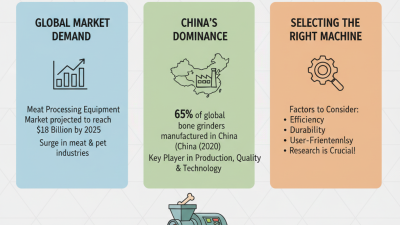
Industry data supports this broader view. The OECD-FAO Agricultural Outlook 2024–2033 identifies continuing global demand for meat and animal-protein products, increasing pressure on processors to improve resource efficiency. China’s National Bureau of Statistics also reports substantial annual meat production, showing why reliable size-reduction equipment matters in large processing systems. However, most public reports do not isolate the bone grinder machine market. That gap deserves attention. Market forecasts can describe processing trends, but they rarely prove which machine performs best in a real factory.
This guide evaluates Chinese bone grinder machine suppliers through practical and technical evidence. Key factors include stainless-steel construction, knife and plate durability, feeding safety, thermal control, noise, maintenance access, and verified output under real bone conditions. Supplier experience matters, especially when the machine handles frozen or mixed bones. Ask for test videos, material certificates, factory references, and measured capacity data. A glossy brochure is not enough. Sometimes, the “best” machine is not the fastest one. It may be the model that produces consistent particles, cleans quickly, and continues working after months of demanding shifts.
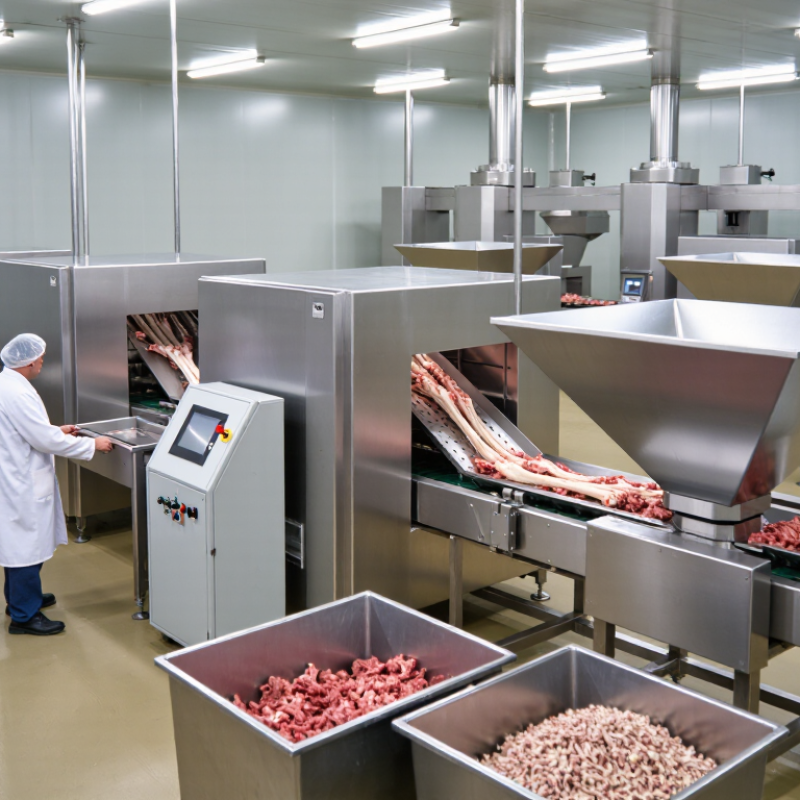
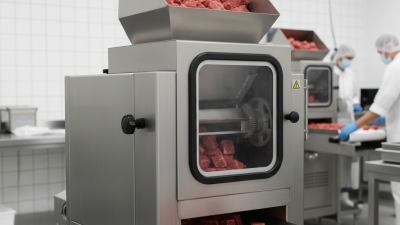
A bone grinder machine reduces animal bones into uniform particles for rendering, fertilizer, or approved feed applications. Its working process is simple but mechanically demanding. Bones enter a reinforced hopper, where rotating cutters or hammers break them apart. A perforated screen controls the final particle size. The processed material then exits through a discharge opening.
Machine performance depends on bone hardness, moisture, feed rate, and motor torque. OECD-FAO Agricultural Outlook 2024-2033 expects continued growth in global meat production, increasing pressure to process by-products efficiently. FAOSTAT data also show the scale of global livestock production. This makes reliable bone-reduction equipment increasingly important. In practical use, stainless steel contact surfaces, overload protection, easy cleaning, and replaceable cutting parts deserve careful attention. A perfect machine does not exist. Poorly matched capacity can still cause blockages, heat, and uneven output.
Tips: Test representative bone samples before purchasing. Ask for particle-size data, hourly capacity, noise levels, and energy consumption. Check whether the machine handles fresh, frozen, or partially dried bones. The best choice is not always the largest model. It should match your material, cleaning routine, and local safety requirements. Operators should also inspect screens and cutters regularly. Small maintenance delays can become expensive failures.
When asking, “What is the best bone grinder machine in China?”, the answer depends on the material and final product. Chinese manufacturers commonly produce coarse bone crushers, hammer mills, plate grinders, and wet bone paste machines. Coarse crushers use rotating knives or toothed rollers. They reduce large bones before finer grinding. Hammer mills create smaller particles through repeated impact. Plate grinders use adjustable discs for more controlled sizing. Wet bone paste machines add water during processing and suit soft, pumpable mixtures.
A dry bone grinder is useful for producing meal with lower moisture. However, it may create heat, dust, and uneven particles if overloaded. Wet grinders usually reduce dust and improve flow, but cleaning becomes more demanding. Stainless steel contact parts are important in food or feed facilities. Operators should also check motor power, screen size, discharge design, emergency stops, and cleaning access. My experience suggests that output claims need careful testing. Real performance changes with bone size, moisture, fat content, and feeding speed.
Tips: Request a sample test with your own material. Ask for particle-size results, not only hourly capacity. Inspect welds, seals, screens, and bearing protection. Confirm electrical specifications and maintenance support before purchase. A machine that looks powerful may still produce poor consistency. Certification and hygiene documentation should match the intended legal application and local requirements.
| Machine Type | Typical Processing Capacity | Typical Motor Power | Suitable Bone Condition | Typical Output Size | Best Application | Main Advantages | Main Limitations |
|---|---|---|---|---|---|---|---|
| Laboratory Bone Grinder | 1–30 kg/h | 0.75–2.2 kW | Small, dry or partially frozen bone pieces; usually pre-cut before grinding | Approximately 0.5–5 mm, depending on screen and cutter configuration | Laboratories, product testing, universities, and small research projects | Compact footprint, relatively easy cleaning, low material consumption, and good control for small samples | Low throughput; not suitable for continuous industrial production or large whole bones |
| Small-Batch Electric Bone Grinder | 50–300 kg/h | 3–7.5 kW | Soft to medium-hard poultry, fish, and livestock bones that have been cut into manageable pieces | Approximately 2–10 mm | Small feed mills, butcher shops, pet-food preparation, and pilot processing lines | Moderate investment, simple operation, and suitable for intermittent production | Requires regular loading and may struggle with very hard, large, or heavily frozen bones |
| Wet Bone Grinder | 300–2,000 kg/h | 11–30 kW | Fresh or chilled bones, meat-and-bone mixtures, and materials with relatively high moisture content | Approximately 3–12 mm | Pet food, meat processing, bone paste, and wet animal by-product processing | Handles moist material effectively and can produce a relatively uniform minced mixture | The output is usually moist; additional separation, cooking, drying, or sterilization may be required |
| Heavy-Duty Bone Crusher and Grinder | 1–5 t/h | 30–75 kW | Large livestock bones and pre-broken hard bone pieces | Approximately 5–30 mm after primary and secondary reduction | Industrial rendering plants, animal by-product facilities, and large feed-processing operations | High torque, robust construction, and suitable for continuous heavy-duty work | Usually needs a pre-crusher, lifting equipment, dust control, and a larger installation area |
| Hammer Mill Bone Grinder | 500–5,000 kg/h | 22–90 kW | Predominantly dry, pre-crushed bone fragments with controlled moisture | Approximately 0.5–8 mm, based on screen aperture | Dry bone meal production, fertilizer ingredients, and feed-material preparation | High reduction ratio, replaceable screens, and adjustable particle-size control | Excess moisture can reduce efficiency; dust collection and noise control are important |
| Bone Pulverizer or Fine Powder Mill | 100–1,500 kg/h | 30–110 kW | Dry bone particles that have already been crushed to a smaller size | Approximately 80–200 mesh, depending on material and mill design | Fine bone meal, mineral powder, fertilizer, and specialty ingredient applications | Produces a finer and more consistent powder than a standard crusher or coarse grinder | Normally requires dry feed, stable material preparation, dust filtration, and higher energy consumption |
| Frozen Bone Grinder | 200–1,500 kg/h | 15–45 kW | Chilled or frozen meat-and-bone blocks and hard frozen by-products | Approximately 5–20 mm | Cold-chain meat processing, pet-food production, and frozen by-product recycling | Designed for low-temperature materials and can reduce thawing requirements | Higher electrical load, greater wear on cutting components, and stricter safety requirements |
| Integrated Crushing, Grinding, and Screening Line | 1–10 t/h | 60–200 kW total installed power | Mixed bone feed requiring size reduction, separation, and controlled final sizing | Commonly 1–20 mm; final size depends on screens and process stages | Large-scale rendering, feed ingredients, fertilizer production, and centralized recycling plants | Automated feeding, multiple processing stages, higher consistency, and easier integration with conveyors and separators | Higher capital cost, more complex maintenance, and greater requirements for layout, utilities, and operator training |
The specifications shown are typical reference ranges for machine categories commonly manufactured in China. Actual capacity, motor power, particle size, and material compatibility depend on bone type, moisture content, feed size, screen aperture, cutter design, and the selected processing configuration.
What Is the Best Bone Grinder Machine in China? Which Features Define the Best Bone Grinder Machine?
The best bone grinder machine should match bone hardness, moisture, throughput, and cleaning requirements. A stainless-steel grinding chamber reduces corrosion risks and supports safer daily sanitation. The cutting system matters more than advertised motor power. Hardened blades, replaceable plates, and stable torque help produce consistent particle sizes. In practical operation, a machine that jams during dense beef bones wastes more time than a slower, reliable model. This is an easy point to underestimate.
Food safety features deserve equal attention. The World Health Organization estimates that contaminated food causes about 600 million illnesses annually, with 420,000 deaths worldwide. Therefore, smooth welds, tool-free access, and drainable surfaces are not cosmetic details. They shorten cleaning time and reduce residue accumulation. The machine should also support documented temperature and sanitation checks. A digital control panel helps, but it cannot replace trained operators.
Noise, guarding, and emergency stopping systems define professional usability. NIOSH recommends limiting occupational noise exposure to 85 dBA over an eight-hour shift. Ask suppliers for measured noise data under real load, not empty-running figures. Overload protection, reverse rotation, and automatic shutdown can prevent severe mechanical damage. Energy consumption per kilogram is another useful comparison, although suppliers may report it inconsistently. I would inspect spare-part availability and plate wear before judging capacity. A larger hopper is not always better. Sometimes, the simplest design performs more honestly.
Choosing the best bone grinder machine in China requires a fair comparison, not a quick look at motor power. In practical testing, check the grinder with the same bone type, moisture level, and feed size. A 15-kilowatt motor may appear strong, yet poor blade geometry can reduce output. Measure kilograms per hour, particle consistency, vibration, and operating temperature. Stainless steel contact parts, sealed bearings, and an accessible feed chamber also matter during daily production.
Tips: Request a live test using your material. Record the inlet size, screen diameter, noise level, and cleaning time. Ask for motor specifications, safety documents, spare-part availability, and a written warranty. Examine welds closely; uneven joints can trap residue and complicate sanitation. The cheapest machine is not always economical.
A reliable supplier should explain maintenance intervals and provide clear operating instructions. I would also compare energy use per ton, because a fast machine can consume more electricity than expected. Inspect the control cabinet and emergency stop before purchase. Small details matter. Some evaluations fail because buyers test only dry samples. Real bones may be colder, wetter, or harder. That difference can change performance significantly. Keep test records, photographs, and operator comments. A second review is worthwhile.
Choosing the right bone grinder in China starts with material, not advertising. Identify bone type, moisture level, and target particle size. Poultry bones need less force than dense beef bones. Frozen material may require a stronger drive system. That choice matters most. Record your daily load, peak batches, and feeding frequency before comparing machines. A compact unit may suit a small workshop, while continuous production needs stable throughput and overload protection.
Look closely at the cutting chamber. Stainless steel contact surfaces, removable plates, and simple access points support cleaner processing. Ask how quickly operators can inspect knives, screens, and seals. Poor access creates hidden residue and longer downtime. Do not guess. Request a sample test using your actual bone size and moisture. Check output consistency, noise, vibration, and motor temperature after repeated runs. A supplier’s capacity figure may describe ideal conditions, not your daily workload.
Reliable selection also depends on service. Review the warranty, spare-part availability, installation guidance, and response time. Ask for electrical specifications and safety documentation suitable for your location. I would compare power consumption against hourly output, rather than choosing the largest motor. Bigger is not always better. During one comparison, an impressive machine seemed suitable until cleaning took too long. That experience changed my view: operator time, maintenance skill, and floor space deserve equal weight. Leave room for future demand, but avoid paying for capacity you cannot use.