2026 Top Commercial Peanut Butter Machine Types?
Choosing a commercial peanut butter machine is not just a matter of comparing motor power or advertised output. The right equipment depends on the product, batch size, and the texture customers expect. A small shop producing fresh, coarse peanut butter has different needs from a factory making a smooth, consistent spread. Details matter.
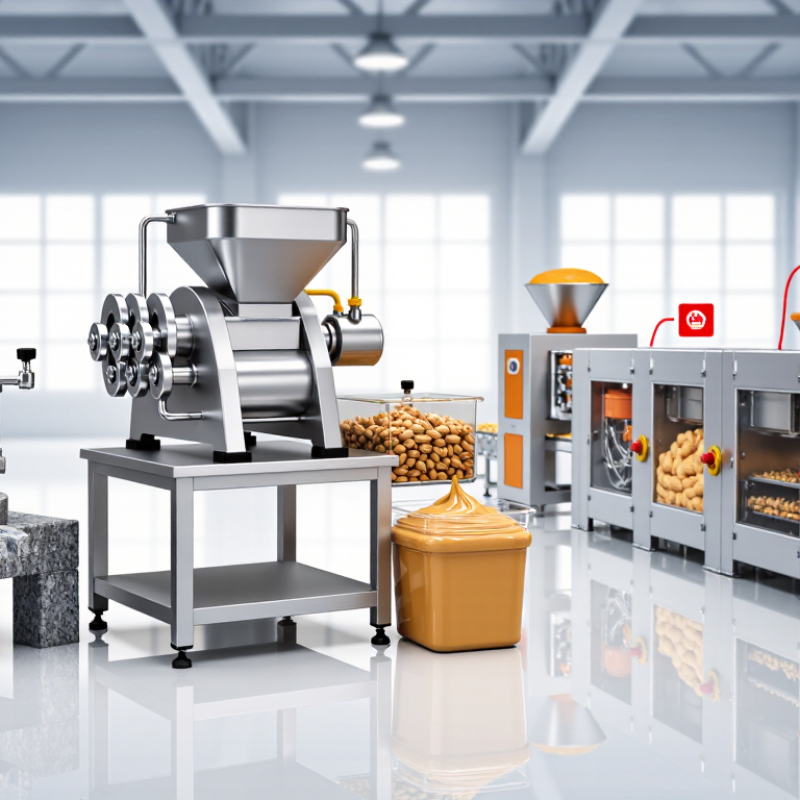
Common machine types include colloid mills, stone grinders, and integrated peanut butter production lines. Colloid mills use close-fitting rotating surfaces to grind and refine peanuts. Stone grinders offer a slower, traditional approach that may suit small-batch production. Larger operations may combine roasting, cooling, peeling, grinding, and filling equipment. Each setup brings different demands for space, cleaning, maintenance, and operator skill.
Texture is a useful starting point. A spoonful should tell you whether the machine can produce the smoothness or visible peanut pieces your customers prefer. But samples alone are not enough. Ask about capacity under real operating conditions, contact materials, temperature control, and how easily parts can be cleaned. Verify specifications with the manufacturer, and consider a product trial before committing. Marketing claims can sound precise while leaving practical questions unanswered.
There is no single best type for every business. A machine that performs well in a supplier’s demonstration may behave differently with your peanut variety, roast level, or production schedule. That uncertainty deserves attention. This guide compares the main commercial peanut butter machine types and explains where each may fit, so buyers can evaluate equipment against actual production needs rather than a headline number.
How Commercial Peanut Butter Machines Process Peanuts
2026 Top Commercial Peanut Butter Machine Types?
How Commercial Peanut Butter Machines Process Peanuts
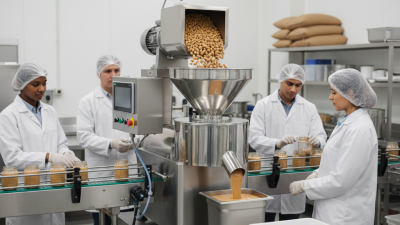
Commercial peanut butter production begins with clean, sorted peanuts. Operators remove stones, damaged kernels, and loose debris before roasting. Roasting develops flavor and reduces moisture. Time and temperature depend on the peanut variety and the desired taste. Too much heat can create a bitter edge. Small changes matter.
After roasting, the peanuts cool before their skins are loosened and removed. A grinder then breaks the kernels into a coarse paste. For a smoother texture, a colloid mill or similar refining machine reduces the particles further. The paste may pass through the mill more than once. It warms during grinding, so operators monitor temperature and adjust the process as needed. The texture is not always perfectly uniform.
Mixing tanks can blend in salt or other recipe ingredients and help keep the paste consistent. Some lines use batch equipment; others connect stages for continuous production. In both setups, food-contact surfaces need regular cleaning, and seals and screens need inspection. A machine’s capacity alone does not guarantee good results. Peanut quality, roast profile, particle size, and handling all shape the final spread. A little variation is normal, but it deserves attention.
2026 Top Commercial Peanut Butter Machine Types: How Peanuts Are Processed
Commercial peanut butter production typically moves from preparation and roasting to cooling, grinding, and blending. The chart shows the usual sequence—not machine capacity or a fixed production specification.
Common equipment includes cleaners and blanchers, roasters, cooling conveyors, colloid or stone mills, and mixing tanks. Actual line layouts vary by product and facility.
Batch Grinders for Small and Mid-Sized Production
Batch Grinders for Small and Mid-Sized Production
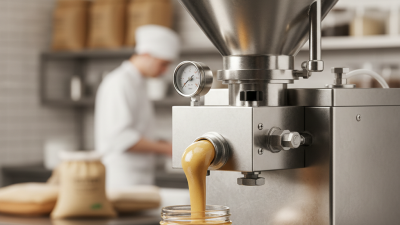
For small and mid-sized peanut butter production, batch grinders offer practical control over each run. Operators load roasted peanuts into a hopper, then adjust the grinding gap or feed rate to influence texture. A coarse setting leaves a slight crunch; a finer pass produces a smoother paste. The change is visible in the jar, though results also depend on peanut moisture, roast level, and oil content.
Look for food-contact surfaces that are easy to inspect and clean, plus a motor sized for the expected batch volume. A machine that runs comfortably below its maximum capacity may handle repeated batches more consistently. Watch the discharge temperature: excessive heat can thin the paste and alter its roasted aroma. Small batches make testing easier. They also require more frequent loading and monitoring.
Before choosing a grinder, run a sample using the peanuts you plan to process. Record the batch size, grinding time, texture, and temperature. It is not a perfect test; production conditions can differ, and small variations matter. Still, those notes help compare machines more reliably than capacity figures alone.
Continuous Grinding Systems for High-Volume Production
2026 Top Commercial Peanut Butter Machine Types: Continuous Grinding Systems for High-Volume Production
Continuous grinding systems suit factories producing consistent peanut butter batches throughout the day. They combine feeding, grinding, cooling, and transfer with fewer manual interruptions. A typical line uses a pre-cleaner, roaster, cooler, and two-stage colloid grinder. The first stage breaks roasted peanuts. The second stage controls smoothness, heat, and viscosity. USDA NASS reported 5.93 billion pounds of U.S. peanut production in 2023, showing the scale behind modern processing demand. Grand View Research estimates the global peanut butter market will expand at about 6.6% annually through 2030. That growth makes uptime and repeatable texture increasingly important.
Temperature control remains the difficult part. Excessive shear can push peanut butter above the target filling temperature. This may thin the product or accelerate oil separation. Inline sensors, jacketed grinding chambers, and automatic flow controls help reduce variation. Operators should still verify particle size and viscosity during each shift. No line is perfectly stable. Peanut moisture, roast level, and crop variety can change performance. A higher-rated grinder is not always better. Oversizing may increase energy use and create unnecessary heat.
Tips: Check throughput using real peanut conditions, not water tests. Request data for particle size, product temperature, and electrical load. Keep a small retention sample from every production run. Review the results before changing rotor speed or grinding gaps. The weak assumption is trusting the machine display alone; laboratory checks remain essential.
How to Match Machine Type to Capacity and Texture Needs
2026 Top Commercial Peanut Butter Machine Types?
Choosing a commercial peanut butter machine starts with capacity and texture, not appearance. The USDA Economic Research Service reported U.S. peanut consumption at about 7.8 pounds per person in 2023. Demand remains substantial. However, a larger motor does not always produce better butter.
For smooth, uniform peanut butter, a colloid mill is usually the practical choice. Its adjustable rotor-stator gap can produce a creamy texture at roughly 100–1,500 kilograms per hour, depending on design and feed preparation. Industrial lines often add a pre-crusher and cooling system. Heat control matters because excessive friction can thin the butter and damage roasted flavor. Small processors may prefer a batch grinder, especially when output stays below 100 kilograms per hour. It is easier to clean and change between recipes.
For natural or textured products, stone mills and slower grinding systems offer more control over particle size. They suit smaller batches and visible peanut pieces. Their output is lower. That trade-off is real. A 2024 Grand View Research market analysis identified texture variety and clean-label demand as important growth factors in nut butter products. Yet reports often describe markets, not factory conditions. Buyers should test actual roasted peanuts, oil content, and moisture before ordering. Ask for a measured trial.
One mistake is common: selecting capacity from a brochure alone. A machine rated at 500 kilograms per hour may reach that figure only with ideal feed and continuous operation. Request particle-size results, temperature records, cleaning time, and energy use from comparable trials. Then match the equipment to daily production, not an optimistic peak number.