Why Buy a Hamburger Patty Machine for Your Business?

Why Buy a Hamburger Patty Machine for Your Business?

A hamburger patty machine can change how a commercial kitchen handles daily production. It portions meat evenly, shapes uniform patties, and reduces repetitive handwork. That consistency matters when customers expect the same burger every visit.

Food equipment specialist Michael R. Waddington explains, “Reliable portion control is the foundation of profitable patty production.” His point is practical. A machine can help control patty weight, thickness, and output speed. It may also reduce product waste caused by irregular shaping. In a busy kitchen, small savings become significant. A few grams per patty can affect hundreds of servings each week.

The right machine should match your operation, not simply your ambition. A small restaurant may need a compact manual or semi-automatic model. A central kitchen may require higher capacity, faster forming, and easier cleaning. Stainless steel construction, adjustable portion settings, and accessible food-contact parts deserve close attention. So does operator training.

Do not expect machinery to solve every production problem. Poorly chilled meat, incorrect seasoning, or weak sanitation practices can still damage quality. That reality deserves honest consideration. Measure your current labor time, hourly output, patty weights, and cleaning demands before buying. Then compare those figures with the machine’s specifications.

The investment can be worthwhile. It can support consistency, labor efficiency, and predictable production. However, the best choice depends on your menu, volume, available space, and staff experience. A hamburger patty machine is useful equipment, but only when it fits the business behind it.
Why Buy a Hamburger Patty Machine for Your Business?

Understanding What a Hamburger Patty Machine Does

Why Buy a Hamburger Patty Machine for Your Business?

Understanding What a Hamburger Patty Machine Does

A hamburger patty machine turns prepared ground meat into evenly shaped portions. It divides the mixture, compresses it, and forms each patty with controlled pressure. The operator usually sets the weight, diameter, and thickness before production begins. This process reduces hand shaping and keeps portions more consistent during busy service.

Consistency matters in several ways. Patties cook more evenly when their thickness matches. Portion control also helps kitchens track food costs with greater accuracy. In practical use, a machine can produce dozens or hundreds of patties per hour, depending on its design and operator. It works especially well for restaurants, catering kitchens, butcher shops, and prepared-food facilities.

Clean handling remains essential. Food-contact parts should be easy to remove, wash, sanitize, and inspect. Cold meat should stay within safe temperature limits during preparation. Staff also need training, because incorrect pressure can create dense patties or damage the meat’s texture. A machine does not fix poor ingredients.

That point deserves attention. Automation is not magic. Some businesses may lose flexibility when customers request unusual sizes or shapes. Equipment also requires cleaning time, regular checks, and sensible storage. Before buying, measure your work area and estimate daily output. A machine that is too large may waste space. One that is too small may slow production. Careful testing often reveals problems that a sales brochure will not.

Key Benefits for Commercial Food Businesses

Why Buy a Hamburger Patty Machine for Your Business?

Commercial food businesses need dependable output, especially during busy service periods. The National Restaurant Association’s 2024 State of the Restaurant Industry report projected U.S. restaurant sales at $1.1 trillion. That scale increases pressure on speed, consistency, and labor control. A hamburger patty machine can portion each patty evenly, whether the target weight is 100 or 150 grams. Even shapes cook more predictably and reduce customer complaints about dry edges or undercooked centers.

The National Restaurant Association’s 2024 State of the Restaurant Industry report projected U.S. restaurant sales at $1.1 trillion.

The labor benefit is practical.

Staff can load prepared meat, adjust the portion setting, and produce uniform patties with less repetitive hand work. This may help kitchens handle demand without adding another full-time position. It also reduces direct contact with raw ingredients, supporting documented hygiene procedures and HACCP-based controls. The U.S. Bureau of Labor Statistics continues to identify food preparation and serving as a major employment sector, so reducing avoidable manual steps can matter during recruitment shortages.

However, the machine is not a magic fix.

Poorly chilled meat, incorrect pressure, or neglected cleaning can still damage quality and safety. Operators should test patty thickness, production speed, cleaning time, and product loss before purchasing. A short trial often reveals uncomfortable details. For smaller kitchens, the equipment may occupy valuable space and require more maintenance than expected.

Its strongest value appears when demand is steady, portions must stay precise, and production records support reliable cost control.

How the Patty-Making Process Works

Why Buy a Hamburger Patty Machine for Your Business?

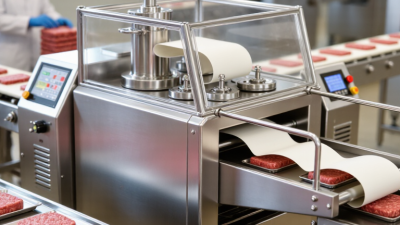
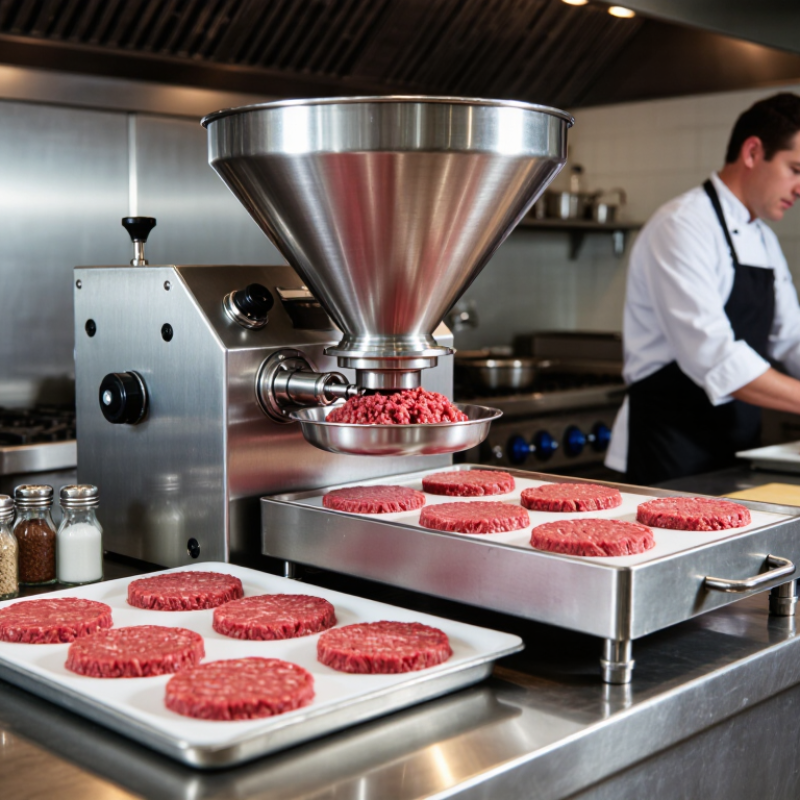
A patty machine turns chilled ground meat into uniform portions through a controlled forming cycle. Operators load the hopper, adjust weight, and select the desired thickness. The machine then presses meat into molds and releases shaped patties onto a tray or conveyor. This process reduces hand shaping and improves portion consistency during busy service periods.

Uniform sizing supports predictable food costs and cooking times. The USDA Food Safety and Inspection Service recommends cooking ground beef to 160°F (71°C). Even patties cook more evenly and make temperature checks easier. The National Restaurant Association’s 2024 State of the Restaurant Industry report projected U.S. restaurant sales above $1 trillion. That scale increases pressure for speed, repeatability, and labor efficiency. A patty machine can help, but it cannot replace safe handling, calibrated thermometers, or trained staff.

Tips: Keep the meat cold before forming. Clean food-contact surfaces between production runs. Check several patties by weight, not just one. A fast machine can also expose weak training. I have seen teams over-trust automation. That is a mistake worth reviewing. Record batch times, portion weights, and cooking results. Small records reveal problems before customers do. Choose a machine that matches daily volume, available space, and cleaning capacity, rather than buying the largest model.

Why Buy a Hamburger Patty Machine for Your Business? – How the Patty-Making Process Works

Process Stage What Happens Typical Operating Data Business Benefit Key Quality or Safety Point
1. Meat Preparation Chilled ground beef is inspected, weighed, and prepared for loading into the machine hopper. Recommended product temperature: approximately 0–4°C (32–40°F) Helps maintain product consistency and supports safer handling. Keep raw meat refrigerated and minimize the time it remains at room temperature.
2. Hopper Loading The meat mixture is placed into the hopper, where an auger or feed system moves it toward the forming area. Typical hopper capacity: about 10–30 kg, depending on machine size Reduces repeated manual handling and supports a smoother production flow. Avoid overfilling the hopper, which can affect portion accuracy and machine performance.
3. Portioning The machine measures a controlled amount of meat before forming each patty. Common patty weight range: approximately 45–250 g Creates uniform serving sizes, helping control food cost and cooking results. Portion settings should be checked regularly with a calibrated scale.
4. Patty Forming The portioned meat is pressed into a selected shape and thickness using a forming plate or mold. Typical output: approximately 20–60 patties per minute for commercial equipment Increases throughput compared with forming patties entirely by hand. The mold size, compression level, and meat texture influence the final shape.
5. Shape and Size Control Operators select the patty diameter, thickness, and weight according to the menu specification. Common diameter range: approximately 80–150 mm Makes products more consistent across shifts, locations, and production batches. Consistent thickness promotes more even cooking and predictable serving times.
6. Patty Release Formed patties are discharged onto a tray, conveyor, separator sheet, or packaging line. Handling method: manual collection or integrated conveyor transfer Can reduce direct hand contact and connect forming with downstream operations. Use clean food-contact surfaces and prevent raw patties from contacting ready-to-eat foods.
7. Chilling or Freezing Fresh patties are chilled for short-term use, while products intended for storage may be frozen. Storage target for refrigerated raw ground beef: 4°C (40°F) or below Helps preserve quality and supports organized inventory management. Follow applicable local food regulations for storage time, temperature, and labeling.
8. Cooking Preparation Patties are transferred to the grill, griddle, oven, or other approved cooking equipment. Minimum internal temperature for ground beef: 71°C (160°F) in many food-safety guidelines Uniform patties can improve cooking predictability and reduce preparation delays. Verify internal temperature with a food thermometer rather than relying only on appearance.
9. Cleaning and Sanitation Food-contact parts are disassembled as required, washed, rinsed, sanitized, and dried after production. Routine: clean after each production session and whenever contamination may occur Supports hygiene, reduces cross-contamination risk, and protects machine service life. Use cleaning procedures and chemicals suitable for food-contact equipment.
10. Production Review Operators record output, rejected pieces, portion weights, downtime, and cleaning completion. Useful indicators: patties per hour, weight variation, yield, labor time, and downtime Provides data for improving labor efficiency, consistency, and production planning. Regular checks help identify worn parts, incorrect settings, or changes in meat texture.

Choosing the Right Machine for Your Production Needs

Why Buy a Hamburger Patty Machine for Your Business?

Choosing the right patty machine starts with your actual production needs, not an impressive output number. Estimate normal demand, weekend peaks, patty weight, and available labor. A machine producing 600 patties per hour may be unsuitable for a kitchen needing only 150. It could occupy valuable space and create unnecessary cleaning work. Measure the counter area carefully. Small details matter.

Consider portion accuracy, hopper capacity, patty thickness, and adjustment speed. Consistent portions help control food costs and cooking times. The machine should also handle your recipe’s temperature, fat content, and texture without damaging the mixture. Stainless, food-contact surfaces are easier to inspect and sanitize. Removable parts can reduce cleaning time, but only when they are simple to reassemble. Ask to see the cleaning procedure. Short training helps.

Test the machine with your own meat mixture before purchasing. A sample using another recipe may hide problems with sticking or uneven forming. Check whether one operator can load, form, and pack patties safely during busy periods. Review electrical requirements, noise levels, maintenance access, and available technical support. My early production estimates were often too optimistic, especially during cleaning and changeovers. Build those minutes into the schedule. A practical trial can reveal more than a polished specification sheet.

Evaluating Costs, Maintenance, and Long-Term Value

Why Buy a Hamburger Patty Machine for Your Business?

A patty machine can reduce preparation time during busy service. Staff load seasoned meat, set the portion size, and produce uniform patties. That consistency affects cooking time, food cost, and customer expectations. A hand-formed patty may vary by 15 to 30 grams. Across several hundred servings, that difference becomes expensive. However, the purchase price is only one part of the calculation. Include delivery, installation, training, electricity, and possible adjustments to your production area.

Maintenance deserves equal attention. Look for removable food-contact parts, clear cleaning instructions, and accessible seals. After service, staff may need to wash the hopper, forming plate, and safety guards. If cleaning takes too long, shortcuts become tempting. That creates operational and hygiene risks. Keep a simple log for inspections, lubrication, replacement parts, and unusual noise. Small failures matter. A worn forming plate can produce uneven edges, causing more waste during cooking. Preventive maintenance usually costs less than emergency downtime, but schedules can still be missed.

Long-term value depends on actual volume, not optimistic forecasts. A small café serving 80 patties daily may not recover the investment quickly. A high-volume kitchen could save several labor hours each week. Measure current forming time for five working days, then compare it with the machine’s realistic output. Do not rely only on advertised capacity. I would also test cleaning time with the least experienced shift member. That result may challenge the original decision. A durable machine should support steady production without making daily work harder.