Why Choose a Fish Cutting Machine for Your Business?

For seafood processors, retailers, and commercial kitchens, consistency often decides whether an order succeeds. A fish cutting machine can help standardize portions, reduce repetitive handwork, and improve daily production control. It can handle tasks such as slicing fillets, trimming portions, or cutting whole fish, depending on its design. The right model may create cleaner cuts with less product variation. That matters. A worker can spend less time measuring each piece and more time checking quality, packing orders, or managing freshness.

However, equipment should support a proven workflow, not replace careful planning. Fish size, bone structure, moisture, and required portion weight can affect cutting results. A machine that works well for salmon may not suit small, delicate fish. Operators also need practical training, protective procedures, and reliable cleaning routines. Food-contact surfaces must be easy to inspect and sanitize according to local requirements. These details are easy to overlook.

From an operational perspective, buyers should compare cutting accuracy, output capacity, blade access, maintenance needs, and after-sales support. Energy use and spare-part availability also influence the real cost. A low purchase price may become expensive when downtime increases. In my experience, the best choice is rarely the largest machine. It is the one that matches product volume, staff skills, and available space. Some uncertainty remains, especially when product sizes change seasonally. Careful testing with actual fish is therefore more dependable than relying on specifications alone.
Why Choose a Fish Cutting Machine for Your Business?

What Is a Fish Cutting Machine?

Why Choose a Fish Cutting Machine for Your Business?

What Is a Fish Cutting Machine?

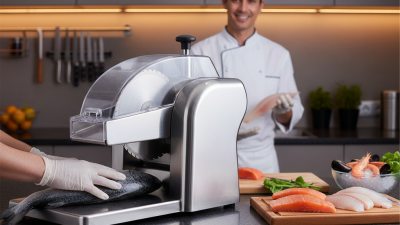
A fish cutting machine is industrial equipment designed to portion, slice, fillet, or trim fish with controlled blade movement. It replaces inconsistent hand cutting with repeatable processing. Operators usually adjust cutting thickness, conveyor speed, and product placement for different fish sizes. Some machines also remove fins, tails, bones, or unwanted skin.

The details matter.

The Food and Agriculture Organization’s The State of World Fisheries and Aquaculture 2024 reported 185.4 million tonnes of aquatic animal production in 2022. Aquaculture supplied about 51% of that volume. Such scale increases pressure on processors to improve speed, yield, and workplace consistency. A suitable cutting machine can create more uniform portions, reduce repetitive knife work, and support cleaner production areas. It may also help businesses record output more accurately.

However, automation is not automatically better. Poor blade adjustment can damage flesh and increase waste. Staff still need training, sanitation routines, and regular inspections. Fish temperature also affects cutting quality. Chilled product usually holds its shape better than warm product. This practical point is easy to overlook.

Before purchasing, measure daily volume, species, average fish size, desired cut, and available floor space. Review cleaning access and spare-part support, too. A machine that looks efficient may perform poorly with your raw material. Trial testing is wise. Data should guide the decision, not showroom appearance.

How Does a Fish Cutting Machine Work?

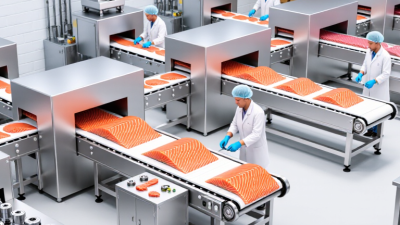
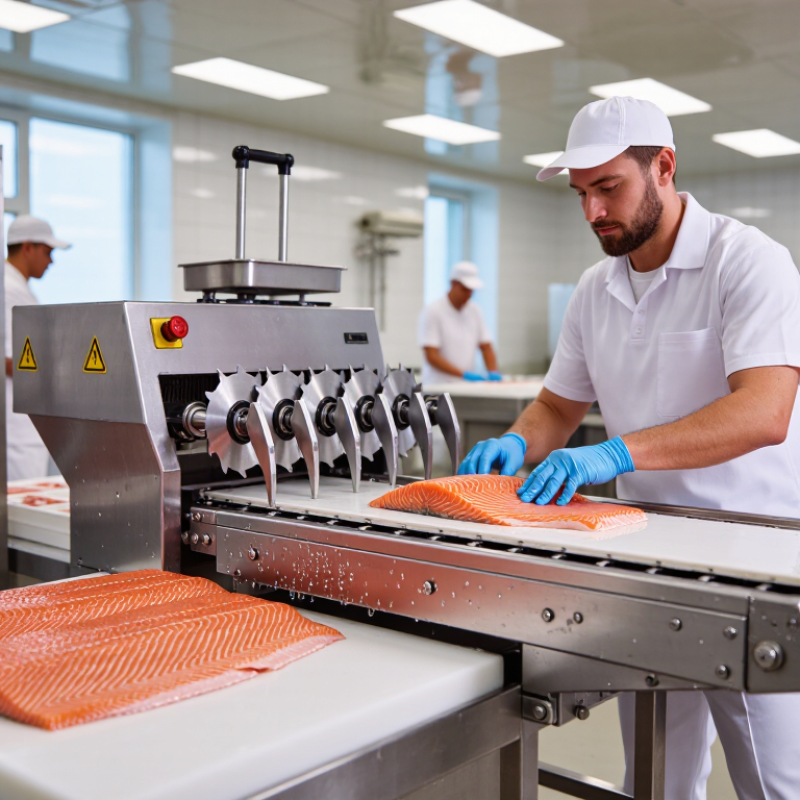
A fish cutting machine turns a whole fish into consistent portions with controlled speed and pressure. Its operation begins with placing cleaned fish onto a food-grade conveyor or holding tray. Guides keep the fish aligned before the cutting section.

Sharp circular blades, band knives, or adjustable slicing tools then separate the fish into steaks, fillets, or smaller pieces. The machine’s settings control cutting thickness, portion size, and conveyor speed. Some models use sensors to detect fish position and reduce uneven cuts. Others depend more on manual adjustment and operator experience. It is not magic. Fish size, temperature, and shape can change the result. A chilled fish usually holds its structure better during cutting. However, overly cold products may become difficult to position accurately. The first setting may be wrong, so operators should inspect sample portions before full production.

Tips: Keep blades sharp and check alignment each shift. Clean contact surfaces after use, following approved sanitation procedures. Wear suitable protective equipment and keep hands away from moving parts. Record thickness settings for different fish sizes. This saves time, but records should still be reviewed when raw materials change. A short test run can reveal loose guides, uneven pressure, or excessive waste before the main batch begins.

Which Fish Cutting Tasks Can It Automate?

Why Choose a Fish Cutting Machine for Your Business?

Which Fish Cutting Tasks Can It Automate?

A fish cutting machine can automate repetitive work with steady pressure and consistent blade movement. This matters as seafood processing grows more demanding. FAO’s The State of World Fisheries and Aquaculture 2024 reports that global fisheries and aquaculture production reached 185.4 million tonnes in 2022. About 89% of aquatic animals were used for human consumption. More volume means tighter control over yield, hygiene, and production speed.

Depending on the model, one machine can scale fish, remove heads, open the belly, and separate fillets. It may also trim edges, remove pin bones, cut steaks, or divide portions by weight. Sensors can identify fish size and adjust cutting positions. This reduces uneven pieces on the processing table. It also limits repetitive knife work, which can cause fatigue during long shifts. However, automation is not magic. Species, temperature, shape, and bone structure still affect results. Operators must check cuts and adjust settings.

Tips: Test the machine with your actual fish sizes before purchasing. Record yield, trimming loss, cleaning time, and hourly output. Use FAO’s 2024 findings as market context, but rely on your own production data. A short trial can reveal more than a sales promise. Keep a manual inspection step. Small errors can become expensive waste.

Why Choose a Fish Cutting Machine for Your Business? - Which Fish Cutting Tasks Can It Automate?

Fish Cutting Task Typical Product Automated Action Automation Level Main Business Benefit Important Operating Considerations
Head Removal Whole round fish Positions the fish and makes a programmed cut behind the gill area. High Creates more uniform products and reduces repetitive knife work. Cut position must be matched to the species, fish size, and desired yield.
Gutting and Evisceration Gutted whole fish Opens the abdominal cavity and removes internal organs through guided cutting and cleaning stages. High Supports faster primary processing and more consistent hygiene procedures. Pre-sorting by size and correct cleaning after each production run are essential.
Filleting Skin-on or skinless fillets Follows the backbone to separate flesh from the carcass with repeatable blade movement. High Improves portion consistency and can reduce flesh left on the frame. Performance depends on fish shape, freshness, bone structure, and accurate alignment.
Skinning Prepared fish fillets Separates skin from the fillet using a controlled feed and skinning blade. High Produces a cleaner presentation and reduces manual trimming effort. Blade settings must be adjusted to avoid excessive flesh loss or skin residue.
Pin-Bone Removal Boneless fillets Uses a mechanical or guided removal system to extract remaining pin bones. Medium to High Improves eating quality and makes fillets more suitable for retail and foodservice. Final inspection is still recommended because bone position varies by species and size.
Steak Cutting Cross-cut fish steaks Divides whole fish or large sections into repeated cross-sectional portions. High Delivers consistent portion thickness and simplifies packaging and pricing. Portion size is controlled by feed settings, blade spacing, and fish geometry.
Portion Cutting Retail or foodservice portions Cuts fillets into specified lengths, weights, or portion formats. High Supports standardized products and reduces variation between operators. Weight-based accuracy depends on uniform raw material and a suitable portioning system.
Slicing Thin slices for prepared foods Produces repeated slices from fillets or fish blocks at a selected thickness. High Creates consistent slice appearance and increases production repeatability. Product temperature, firmness, and blade sharpness affect slice quality.
Trimming Finished fillets and portions Removes selected edges, belly flaps, dark meat, or irregular sections. Medium Improves product presentation and reduces time spent on repetitive finishing work. Some irregular shapes still require visual inspection or manual finishing.
Butterfly Cutting Opened fillets or whole small fish Makes a controlled cut so the product opens while remaining connected along one side. Medium to High Creates a consistent format for grilling, smoking, frying, and ready-to-cook products. Correct orientation and cut depth are required to prevent separation or uneven opening.
Belly-Cut Opening Whole fish prepared for cooking Makes a repeatable abdominal opening for cleaning, seasoning, or further processing. High Improves consistency in preparation and reduces exposure to repetitive cutting motions. Cut depth must be controlled to protect the product and avoid unnecessary waste.
Block or Cube Cutting Frozen or chilled fish blocks Divides blocks into strips, cubes, or smaller processing units. High Provides uniform ingredients for further processing, meal production, and foodservice. Product hardness and temperature must be compatible with the cutting equipment.

Note: Automation capability varies by fish species, product size, temperature, freshness, cut specification, and machine configuration. In practice, automated equipment is commonly combined with product loading, quality inspection, and sanitation procedures.

What Business Benefits Does It Provide?

A fish cutting machine can turn a crowded processing line into a more controlled operation. The benefit is not only speed. It is repeatable cutting, cleaner handling, and easier production planning. FAO’s State of World Fisheries and Aquaculture 2024 reported 185.4 million tonnes of aquatic animal production in 2022. About 89% was used for human consumption. That scale increases pressure on processors to deliver consistent portions with fewer avoidable losses.

A well-selected machine can reduce repetitive manual work and make output easier to measure. Operators can set cutting thickness, portion size, and processing speed for different fish types. This supports more accurate costing and steadier retail supply. It may also reduce direct hand contact, which helps strengthen hygiene controls when cleaning and staff procedures are properly managed. Waste becomes measurable. Trimmings can be tracked by batch, helping managers identify poor yield or incorrect settings.

A machine is not magic. Poor calibration can increase waste, damage delicate flesh, or slow the line. Staff still need practical training and daily inspection. The FAO also highlights the importance of reducing post-harvest losses across aquatic food chains, where better handling and processing can protect food value. For a growing business, the strongest return may come from consistency rather than maximum speed. A small gain in yield, repeated across hundreds of kilograms, can noticeably improve margins. Yet every operation should test real fish sizes, labor costs, cleaning time, and maintenance needs before investing.

Why Choose a Fish Cutting Machine for Your Business?

The global seafood industry processes large volumes from both wild capture fisheries and aquaculture. A fish cutting machine can help businesses improve processing consistency, reduce repetitive manual work, and support higher-volume operations.

In 2022, global aquatic animal production reached approximately 185.4 million tonnes, including 94.4 million tonnes from aquaculture and 91.0 million tonnes from capture fisheries. This scale creates demand for efficient cutting, portioning, and preparation equipment that can deliver stable output while helping businesses manage labor-intensive processing tasks.

Source: FAO, The State of World Fisheries and Aquaculture 2024.

How Should You Choose the Right Machine?

Choosing the right fish cutting machine starts with your daily catch, not its advertised speed. The FAO’s State of World Fisheries and Aquaculture 2024 reported 185.4 million tonnes of aquatic animals produced globally in 2022. That scale makes consistent cutting, yield control, and hygiene practical business priorities. Start with the fish.

Measure the average weight, thickness, skin condition, and target cuts from your own production line. A machine designed for uniform fillets may struggle with mixed sizes or soft flesh. Ask for a live test using your fish, chilled at the same temperature used in production. Check cutting accuracy, trim loss, cleaning time, noise, and operator safety. Small losses become expensive quickly. The UNEP Food Waste Index Report 2024 estimated 1.05 billion tonnes of food were wasted in 2022, although the figure covers all food sectors. Better portion control can still reduce avoidable waste in a processing room. It is not the whole answer.

Review contact materials, tool removal, drainage, and sanitation access against applicable food-hygiene requirements. Codex General Principles of Food Hygiene emphasize hygienic design and contamination control. Also calculate total ownership cost, including electricity, blades, maintenance, training, and downtime. A faster machine is not automatically better. I would rather choose a slower cutter that produces stable portions and cleans thoroughly. That judgment can be wrong without production records, so record yield and stoppages for several weeks before committing.